

My Thoughts Post- Junior Indaba 2026
If you had asked me if the Junior Indaba would leave me questioning my own outlook on the South African Junior Sector a week ago, I’d have simply said “I’m a positive guy with a realistic streak to match my optimism”.
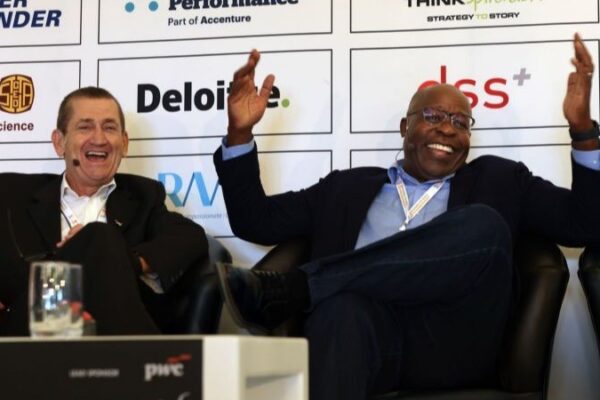
Apparently, I am no match for guys like
Billy Mawasha
or
Jason Brewer
!
One of the unintended consequences of spending too much time discussing the challenges facing South African mining is that we occasionally fail to notice where genuine progress is taking place, myself included. We also fail to see the opportunities in the risks.
Over the past few years, much of the industry’s attention has understandably been focused on regulatory uncertainty, licensing delays, infrastructure constraints, energy security, declining investor confidence and the delays of the promised Cadastral System. These issues are important and deserve continued scrutiny. They influence investment decisions, affect project timelines and ultimately shape the competitiveness of South Africa as a mining jurisdiction.
However, after reflecting on the discussions, presentations and conversations that took place at The Junior Indaba 2026, I have found myself asking a different question.
Have we become so focused on the challenges confronting the mining industry that we are overlooking the significant opportunities within the junior mining sector itself?
The question is worth considering because, despite all the legitimate concerns surrounding the broader operating environment, there is growing evidence that the junior mining ecosystem has become more sophisticated, more entrepreneurial and more globally connected than it was a decade ago. Surely that is significant progress!!
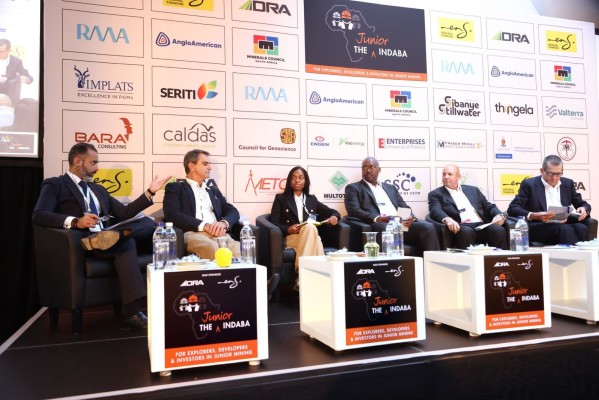
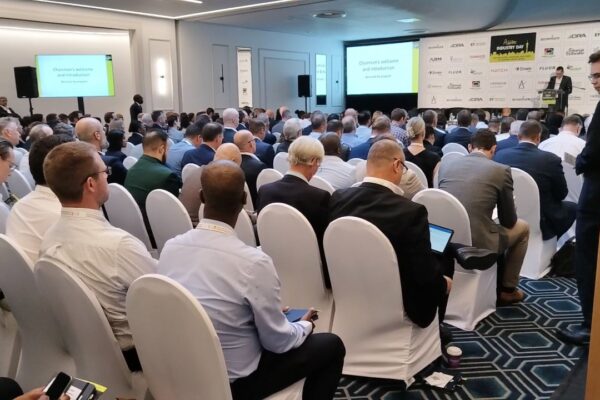
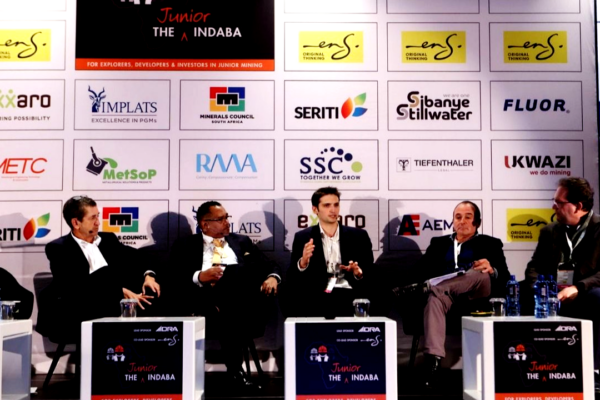
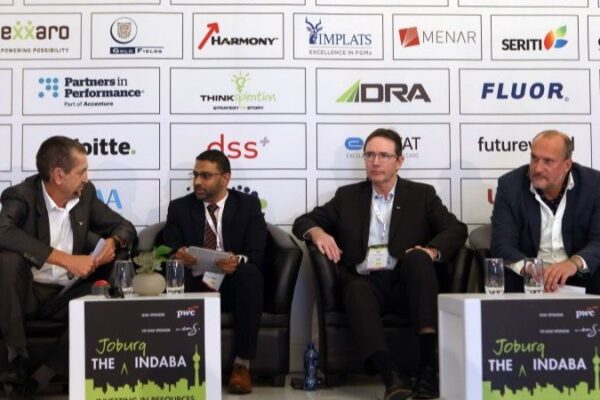
This year’s Junior Indaba did not leave me with the impression of a sector waiting for conditions to further improve before taking action. Quite the opposite was true. The overwhelming impression was of a community of explorers, developers, financiers, technologists and entrepreneurs actively positioning themselves for opportunities they believe are already emerging. And if I were to make a semi-subjective observation, this was a community who had decided to create the opportunities for themselves.
What made this particularly interesting was that the confidence on display was not rooted in speculation. It was rooted in projects, data, technology, market understanding and an increasingly sophisticated appreciation of where mining fits within broader global economic trends.
That represents a meaningful evolution.
Historically, junior mining has often been viewed through a narrow lens. The conversation tended to focus on exploration success, capital raising and commodity prices. While these factors remain important, today’s junior mining companies are operating in a far more complex environment. Success increasingly depends on understanding geopolitics, supply chains, downstream markets, technology, environmental expectations and investor requirements alongside the traditional disciplines of geology and engineering.
Many of the presentations during the conference reflected precisely this shift.
The most impressive companies were not necessarily those with the largest resources or the most ambitious production targets. Rather, they were those that demonstrated a clear understanding of how their projects fit into the changing global demand landscape for minerals and metals, whilst being cognisant of the ever-evolving AI ecosystem that is on offer as an almost silent partner in every major merger.
The emergence of critical minerals as a strategic priority for governments and industries around the world has fundamentally altered the context within which junior miners operate. Discussions about copper, graphite, rare earth elements, lithium, manganese and other strategic minerals are no longer confined to mining conferences. They increasingly form part of conversations about industrial policy, energy security, defence capabilities and economic competitiveness.
This shift creates opportunities, but it also demands a higher standard of thinking.
Owning a mineral resource is no longer sufficient. Companies must understand who their end customers are likely to be, how supply chains are evolving and where future value will be created. The mining industry has traditionally focused on finding and extracting resources. Increasingly, it must also focus on understanding the markets those resources serve.
One of the most encouraging themes to emerge from this year’s conference was the extent to which many junior mining leaders already appeared to recognise this reality. The conversations were noticeably more commercial, more strategic and more globally informed than similar discussions might have been ten or fifteen years ago.
Technology itself emerged as another important theme.
Mining remains a capital-intensive industry and technology is certainly not free. However, it is increasingly acting as an enabler that allows smaller and more agile organisations to tackle challenges that previously would have required substantially larger resources.
This has important implications for junior miners.
Historically, scale often created insurmountable advantages for larger organisations. Today, technology is helping to narrow that gap. It is creating new opportunities for entrepreneurial teams to pursue projects, interpret data and develop opportunities in ways that were not possible for previous generations.
The inclusion of AI into the subject of geological data and research that spans over a hundred years, data that is specific to South African Geologists, has meant that suddenly, an entirely new world of resource material has been opened to our current miners and our future explorers. That was something that caused much excitement in a room filled with rock enthusiasts.
Perhaps the most encouraging aspect of the conference, however, was not the technology, the projects or even the commodities.
It was the people.
After more than four decades in the mining industry, I remain convinced that mining’s greatest innovations rarely originate from established systems. More often, they emerge from individuals willing to challenge assumptions, pursue unconventional opportunities and accept risks that others prefer to avoid.
People who are looking at things differently, connecting the dots in ways nobody had done before. That entrepreneurial spirit was evident throughout the conference.
Junior mining remains the industry’s incubator. It is where discoveries are made, new ideas are tested, and it is where future mining leaders gain experience. It is where many of the mines that will eventually supply the world’s future mineral requirements begin their journey, and that alone is enough to fill my old bones with the energy of a young miner.
For young professionals entering the industry, this remains one of the most exciting environments in which to build a career. Large mining companies perform an essential role and will continue to do so. Yet the energy, experimentation and sense of possibility that characterise the junior sector remain difficult to replicate elsewhere.
It is also impossible to ignore the broader regional context.
One of the recurring observations throughout the conference was the growing momentum visible elsewhere on the African continent. Namibia and Botswana continue to attract significant attention from investors and explorers alike, supported by both geological potential and a reputation for regulatory efficiency. Angola is increasingly appearing on the radar of mining companies seeking new opportunities and untapped prospectivity.
These developments should not be viewed with envy but with perspective.
They remind us that geology alone is never enough. Mineral wealth must be matched by effective institutions, efficient systems and a regulatory environment capable of converting potential into investment and investment into economic value.
South Africa possesses extraordinary geological advantages. The challenge is not whether opportunities exist, rather, it is ensuring that we are able to compete effectively for the capital required to develop them.
Yet even as these broader debates continue, I left Junior Indaba with a sense that something important is happening within the junior mining sector itself. There is a generation of entrepreneurs, geologists, engineers and executives emerging who appear remarkably comfortable operating in uncertainty.
That matters because mining has always been a forward-looking industry.
Every mine begins with a belief that something valuable lies beneath the surface and every exploration programme begins with a hypothesis. On that basis, every investment decision is ultimately a statement about the future.
At present, several powerful trends are converging simultaneously. Electrification continues to reshape commodity demand; critical minerals are becoming increasingly important to industrial policy and national security strategies. New technologies are changing how exploration and development take place and global supply chains are being reassessed and reconfigured.
If these trends continue, significant capital will need to flow into new discoveries and new projects around the world. The junior mining sector will inevitably play a central role in that process.
For that reason, I believe there is a possibility that we are standing at the beginning of a particularly important period for junior mining. Whether history ultimately describes it as a bubble, a cycle or even a golden era remains to be seen. Such labels are best applied with hindsight.
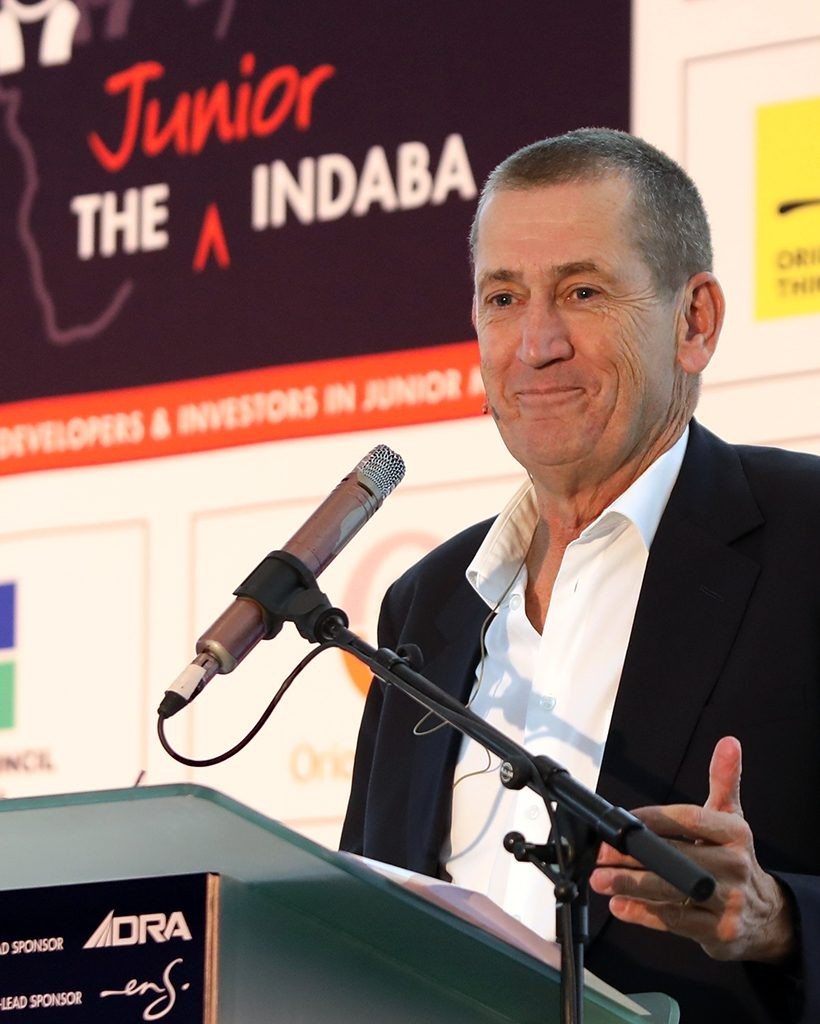
If The Junior Indaba 2026 demonstrated anything, it is that the future of mining is unlikely to be built solely by the largest companies, the biggest balance sheets or the most established institutions. It will also be shaped by entrepreneurs willing to explore, innovators willing to experiment and leaders willing to pursue opportunities before they become obvious to everyone else. The junior mining sector has always been where that process begins.
The events of the past week suggest it may once again be where some of the industry’s most important chapters are about to be written.
~ Z.B.S





































Latest Posts