
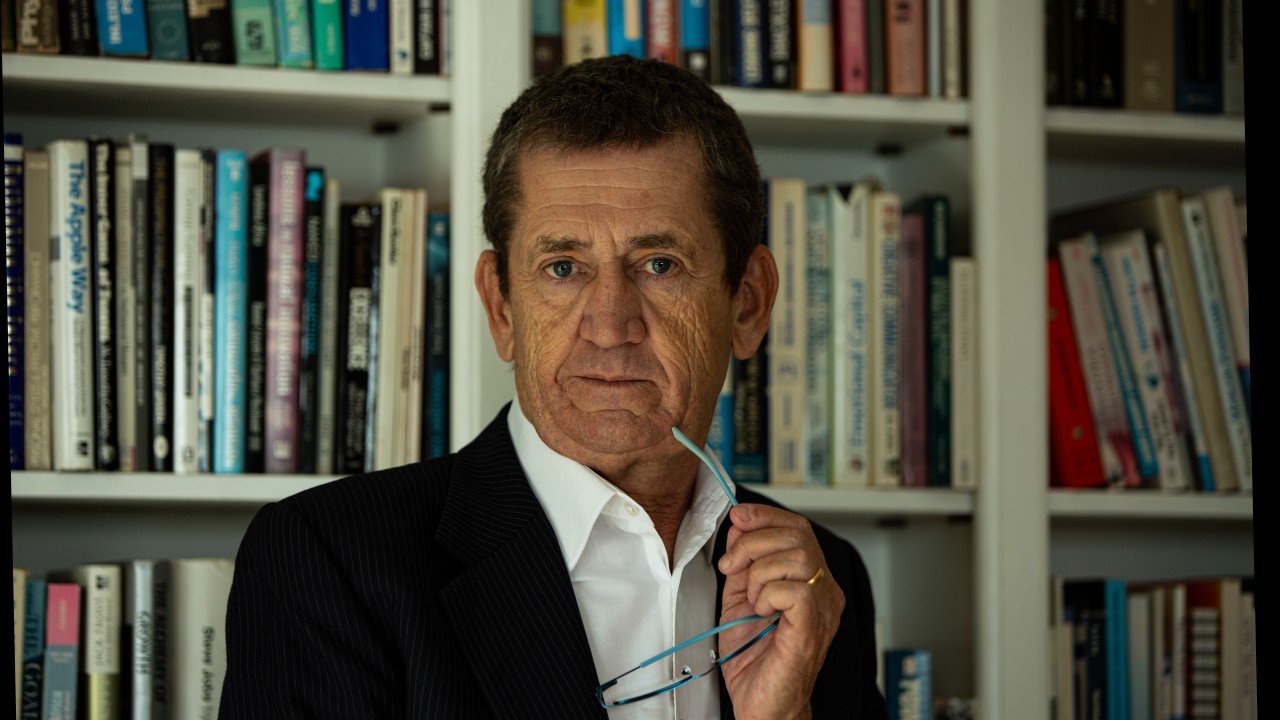
My Musings Inspired by Rudyard Kipling
A few Sundays ago on a hot summer’s morning, we were sitting in a crowded church in Bryanston when the amazing pastor’s use of my all-time favourite poem, ‘If’, reminded me of the role this lovely poem has played in my life over the years. Of course, my wife
Tracey Swanepoel
introduced me to it, after all she is an English major and I am a boertjie from Rustenburg!
Rudyard Kipling wrote ‘If’ in 1895, at the height of the British Empire, an age of confidence, expansion and certainty, at least on the surface. Beneath it sat anxiety: industrial disruption, labour unrest, imperial overreach and a growing sense that the old rules might not hold forever. Sound familiar?
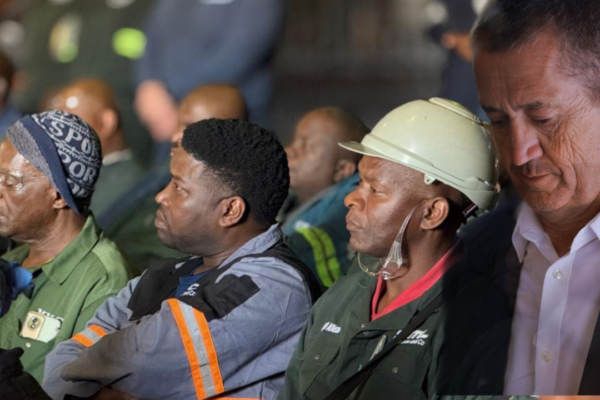
It is not surprising that in the early 2000’s this poem was as relevant to the leadership challenges in the South African mining, as it is now. Many of the ‘manne’ in the audiences of my monthly early morning shaft roadshow meetings looked confused and even a bit embarrassed when I regularly quoted from it.
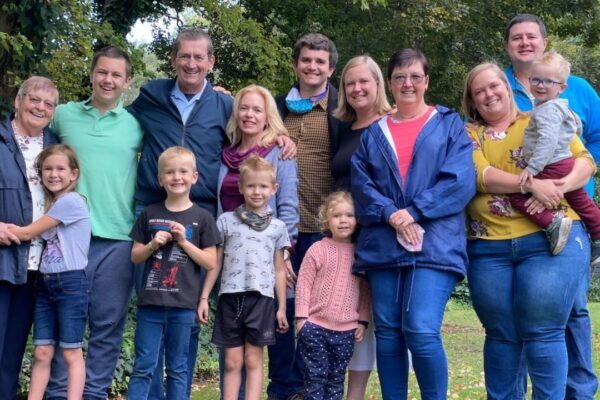
When our son
Zack Swanepoel
was born just over 20 years ago, one of our rising stars at Harmony, @Braam van Zyl gifted us a framed copy of the poem. It has been hanging in Zack’s room ever since.

‘If’ is often read as a poem about character. I read it as a manual for leadership in uncertain times, written before the word “volatility” (or VUCA!) became fashionable, but when the world was already wobbling. The poem is not sentimental. I find it both demanding and inspiring. And that is precisely why it still matters.
In my personal unfinished journey to becoming a wiser person, I often find myself reflecting on the guidelines embedded in this beautiful poem.
Five lines from ‘If’ feel provocatively relevant today.
1. “If you can keep your head when all about you are losing theirs…”
Today’s leaders operate in permanent noise. When markets swing, when stakeholders demand and shout, when geopolitical disruption is increasing, certainty evaporates overnight. Losing your head is easy and understandable; keeping it is rare.
Panic travels faster than facts. Leadership credibility is tested first by composure. It requires presence and visibility; people want to feel safe in the knowledge that their leaders are in it with them. Now, more than ever before, it is up to leaders to help make sense of the noise, to connect the dots and most importantly, to give hope.
2. “If you can trust yourself when all men doubt you, but make allowance for their doubting too…”
Leaders are pushed to choose between stubborn (and false) certainty or endless appeasement. On my own journey, I often paused to consider the fine balance between confidence and arrogance. The confidence to make the tough decisions, whilst being open minded enough to listen to others. Even to those who doubt you, your intentions and your competence.
It’s easy to say that you must surround yourself with people smarter than you, but substantially harder to keep your ego in check and then allow them the space to be just that.
3. “If you can wait and not be tired by waiting…”
Strategic fatigue often sets in long before outcomes appear. In a world of monthly targets, quarterly results and immediate gratification, this is easier said than done. Personally, my top ‘strength’ is that of ‘activator’. Waiting is not my natural state! Yet I know that deep and sustainable value, just like values, gets built over time.
In the world of critical minerals, China playing the long and patient game is in stark contrast to that of the rest of the world’s approach – who seemingly believe that throwing money and Executive Orders at a systemic problem will fix it.
Defining ‘waiting’ as active repetition, practicing and embedding of good habits, rather than just sitting idle, helps me ‘not be tired by waiting…’
4. “If you can meet with Triumph and Disaster and treat those two impostors just the same…”
Success often masquerades as skill. Success is never ascribed to luck, and yet almost all failures have at least some components of bad luck ascribed to them. Interesting! We say we should learn from our failures and I agree wholeheartedly, but it’s not easy. It demands personal maturity and a healthy, psychologically safe corporate culture.
Being able to honestly reflect on our mistakes flies in the face of all performance management systems, incentives and their perverse obsession with visible accountability!
If we look at the narrative around governance and responsible stewardship of all matters ESG related, it appears that avoiding a mistake – as opposed to a creating a better world – is the end goal! We talk about innovation and a culture of empowering people, yet we dumb down jobs (even leadership roles) into SOPs, rules, standards and procedures in service of error avoidance!
5. “If you can talk with crowds and keep your virtue, or walk with Kings—nor lose the common touch…”
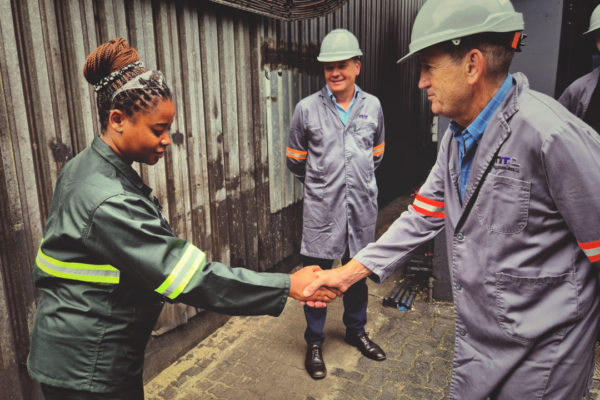
Mining leadership sits at the fault lines of many diverse stakeholder groups. I used to change out of my overalls into a business suit on my way to meet with the Minister to discuss matters of relevance to the industry and the country. I used to travel the world to convince potential investors why our strategy was a worthwhile investment case, whilst regularly addressing workers, often in Fanakalo (which may be better than my second language English), about how their efforts translated into a better future for us all.
One can choose to interpret this challenge as a requirement for agility and the flexibility to fit in, regardless of the audience, but for me this is first and foremost a call for authenticity. If you know who you are, if you can learn to be comfortable enough with yourself to show up as yourself, then I believe you will never lose that common touch. People relate to, and even love the spikiness, the spiciness of authentic leaders!
Talk, no matter how authentic the interaction, is cheap. Talk without traction breeds cynicism.
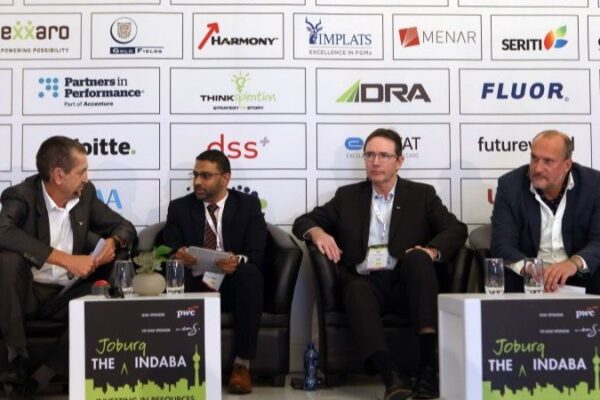
I spend a lot of my time catalysing conversations. Hopefully relevant conversations about our beloved mining industry, leadership and even sometimes government policy and geopolitics. But leadership, especially, is not proven by eloquence, but by follow-through.
Kipling ends ‘If ‘with the promise of maturity, not glory. In uncertain times, that remains the prize.
~ Z.B.S

































Latest Posts