

Editor’s Note by Bernard Swanepoel
In mining and refining, we often talk about tonnes, grades, risk curves, and forecasts. But what we don’t talk about enough is this: the people. The humans underneath the hardhats, behind the legal frameworks, and behind the pressure to deliver results.
This edition of ZBS is different. Not just because we’ve invited two brilliant minds to contribute, but because the topic touches a nerve I’ve carried for years: how do we lead better, more authentically and more inclusively? How do we lead with both competence and care? And how do we ensure our efforts in ESG aren’t just paperwork, but people work?
Lili Nupen’s piece lays out the legal bedrock: what’s changing, and how we build proactive coalitions instead of firefighting compliance. Teheli Morabe reminds us why it matters, with a human-centred take that goes beyond ISO checklists to real-world connection. And then there’s me—sharing why I’ve found my calling in a more active role at THINKspiration.
This isn’t just a newsletter. It’s a call for integration: heart, head, and hand. Let’s get into it.
Contributor Feature: Lili Nupen
BRIDGING THE DIVIDE: LEGAL LEADERSHIP & STAKEHOLDER COLLABORATION FOR SAFETY AND ESG IN MINING & REFINING
South Africa has been actively aligning its mining regulations with international standards to enhance operational safety and environmental stewardship.
By updating legislation to reclassify Tailings Storage Facilities recognising their value to the mining sector, the country mirrors global frameworks like the Global Industry Standard on Tailings Management (GISTM). Alignment between South African legislation and global initiatives is strengthening the integration of ESG principles by embedding rigorous safety, environmental, and governance standards into mining operations, ensuring more transparent, accountable, and sustainable industry practices.
PRACTICAL TIPS FOR ENGAGING STAKEHOLDERS IN SAFETY PROTOCOLS
Proactive engagement with regulators and local communities in resolving key industry issues benefits everyone—helping companies navigate regulatory requirements, enabling enforcement of standards, and protecting community interests, all while advancing safe and sustainable mining practices.
Engaging stakeholders effectively requires open channels of communication and the fostering of trust across all parties involved. Understanding and accounting for the concerns of government officials, unions, and local communities holistically to inform commercial strategies can help mining companies avoid unnecessary conflict, reduce operational delays, and build long-term social license to operate.
When all stakeholders see themselves as part of the same team working toward a shared goal, collaboration becomes more effective and outcomes more resilient.
Practically, the best way to achieve this is by embracing NSDV Law’s “people-over-paper” approach, prioritising open, honest communication through regular, inclusive engagements, be it with regulators or local communities. Transparency, timely updates, and a genuine responsiveness to feedback are key to building the trust and collaboration needed to implement safety protocols that are both effective and inclusive.
This ensures all stakeholders feel heard, valued, and confident that their concerns have meaningfully influenced outcomes.
THE ROLE OF LEGAL ADVISORS IN TRANSLATING ISO STANDARDS INTO SITE-SPECIFIC PROCEDURES
Legal advisors play a crucial bridging role between international standards and on-the-ground realities.
ISO standards, particularly those related to safety, environmental management and quality, set out broad principles and requirements. However, they are not prescriptive, nor do they reflect the unique risks, regulatory obligations and operational structures of each site. This is where legal advisors step in. Our role is to bridge the gap between global standards and operational execution by translating ISO obligations into clear, enforceable internal policies and procedures tailored to each site.
This often involves aligning ISO requirements with domestic legislation, including the Mineral and Petroleum Resources Development Act, 2002 (“MPRDA”), the National Environmental Management Act, 1998 (“NEMA”), and the Mine Health and Safety Act, 1996 (“MHSA”), while ensuring internal governance structures support implementation.
A CALL TO ACTION: STRENGTHENING INDUSTRY-WIDE COALITIONS TO PRE-EMPT CONFLICT AND DRIVE CONTINUOUS IMPROVEMENT
I believe that real progress in mining and refining doesn’t happen in isolation. It’s driven by collective accountability and a shared willingness to confront complex issues head-on, before they escalate. Strengthening coalitions across the sector is no longer optional, it’s essential.
Too often, legal frameworks are approached reactively, activated only when conflict arises. But when the legal function is embedded into broader industry collaboration from the outset, it becomes a powerful tool for pre-empting disputes and shaping smarter, more sustainable outcomes.
We’ve seen the benefit of this in practice, legal advisors sitting at the table with regulators, unions, operators, and communities to align on standards, expectations, and timelines. When there’s alignment, there’s predictability and when there’s predictability, operations can proceed with confidence.
Contributor Feature: Teheli Morabe

‘REMEMBER THAT I CARE’
Monday 19 May I had the privilege to attend one of the best legal liability courses. This was mainly focused on the OSH Act. The whole do and don’ts; what you should have in place, etc.
This made me reflect on what drives health and safety compliance. Is it driven by a genuine desire to protect our employees from harm or the legal repercussions and penalties if we don’t?
MMC has been ISO 45001 accredited, since inception of the new standard. However, I often hear the words, “As per ISO standards”, or “as per the ACT”. A common pitfall we make, is prioritizing compliance with regulations over the core purpose of ensuring employee safety. While adhering to regulations is crucial, it’s equally important to understand the underlying reason for those regulations, which is to protect employees from harm.
The ISO Standards and OSH Act align beautifully. They specifically emphasize leadership and accountability in occupational health and safety and requires top management to be actively involved in driving safety culture. Clause 5 of the ISO standard refers to Leadership and worker participation.
How then do I meet this requirement?
Sure, we have a Health and Safety policy signed and displayed, but honestly, how many of our people know what the Policy really says, I bet, very few. My philosophy and approach is, Let’s Keep it Simple.
I believe that actions speak louder than words. Demonstrating my commitment to workers safety through my actions sets a more powerful message than a piece of paper displayed on a notice board with my signature. MMC process is a very labour-intensive process; our employees are our most valuable asset.
It is my duty as COO to ensure that they go home with all 10 fingers, 2 eyes as well as all parts of their limbs intact. During my years in mining, the department of Mining required employees to carry cards printed with Section 23 of the Mine Health and Safety Act and this was titled “The right to leave a dangerous work and to leave a dangerous place.”
During my daily interaction with employees. I encourage them to feel comfortable to exercise this right. I say: “there is always enough time to do it safely.” I never miss the opportunity to look a person in the eye and say in a meaningful way. “Remember that I care about your safety, and I do not want to see you get hurt’.
Let our motivation for compliance be to empower our employees, show genuine care for their safety and keep our systems simple. By taking these steps, we can ensure that your company remains competitive, compliant, and a great place to work.
After all, a safe workplace is not just good for business—it’s the right thing to do.
My Zero BS Reflections: A Conversation That Matters To Me
Let me get straight to the point:
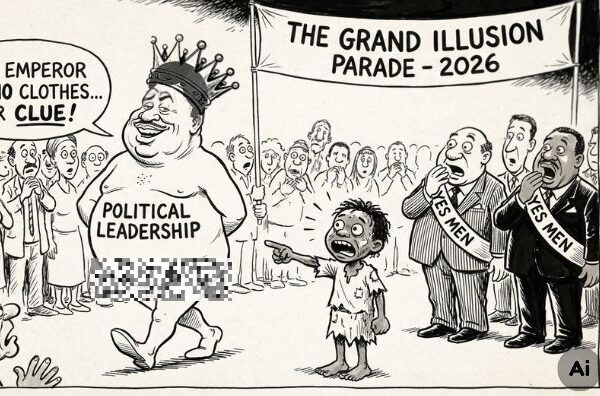
I’ve been around long enough to know that the word “leadership” gets thrown around far too easily. Everyone wants to talk about ‘our commitment to ESG and safety’, but very few are willing to admit when those things are missing from the hearts and minds of those at the coal face .
Or worse, when they’re performative – policies and procedures that remain stuck in files or on office walls.
So when people ask me why I’ve decided to take on such an active role at THINKspiration, the answer is simple. Because it’s a methodology that works. Because I’ve seen it in action.. And because the leaders of tomorrow need more than theories and titles, they need tools, guidance, and a belief that as leaders, we must facilitate the conversations that matter in our companies, especially in our absence.
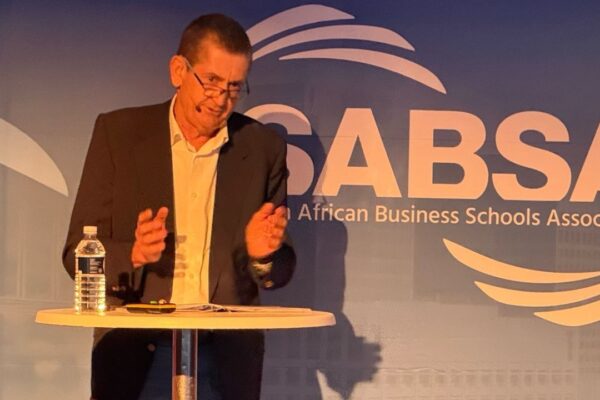
Almost 25 years ago, I clearly remember coming back from the New Orleans Investment Conference in November 1999, on such an emotional high! I had just presented Harmony Gold’s phenomenal growth story to a packed room of investors that was so well received it resulted in a standing ovation. I was mobbed afterwards by shareholders wanting to shake my hand.
On paper, it was perfect.
But beneath the standing ovation was something else: a quiet, growing discomfort that not everything was as rosy as people thought it was. It wasn’t the ‘world-ending’ Y2K bug that was a mere 6 weeks away, (remember that?). Nor the imminent audacious, unsolicited bid we were about to make for Randfontein Estate Gold Mines that was causing the growing discomfort.
Instead I suspected that not many of the almost 50 000 employees of Harmony were as excited about our “success” as our shareholders were!
I was in search of a magic solution to align all stakeholders to the strategy of the company and to let them see how this successful strategy could make their lives better. I needed a way to connect the dots, between strategy and lived experience, between boardroom vision and frontline buy-in. I needed a tool that could speak to everyone in the company, not just those who understood balance sheets and board packs.
And that’s when I came across Tracey’s work.
She was using bold, innovative, cutting edge tools to improve internal communications, the likes of which I had not seen before, certainly not in this environment. Together, we launched the first Visual Strategy Map for Harmony, and I think it is fair to say that we were both shocked (pleasantly) at how well it worked.

Suddenly we were having the ‘conversations that mattered’ internally, all the way down to the stope face, and also with our unions and communities! It’s the work that Tracey, Lisa and I still do today!

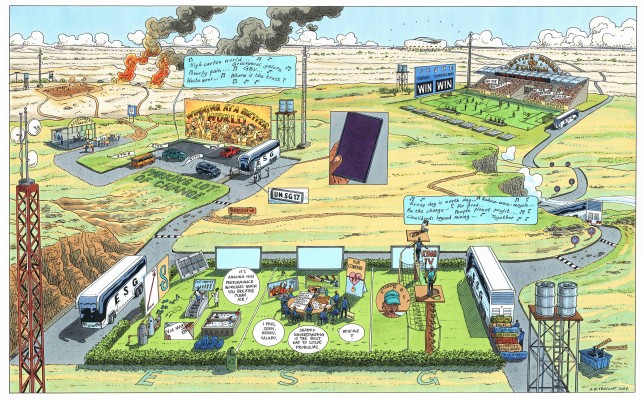
We help companies distill their corporate strategies, or how they approach ESG in an integrated way (*see the Customisable ESG Visual MapStrategy in Liliy’s blog above), or, how they centre employees’ well being at the core of a phenomenal growth strategy.
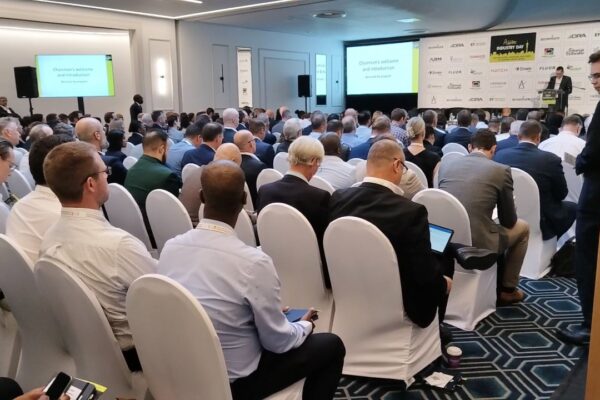
(-**see picture above of Teheli leading conversations at MMC using their ‘famous’ purple mountain Visual Map).
So yes, I’ve sat in the corner offices. I’ve made tough calls, sometimes unpopular ones.
I’ve led teams through storms, and I’ve missed the mark more than once. That’s why this chapter matters. Because if I can take those lessons, and offer them, bluntly and usefully, to others walking similar paths, then maybe those mistakes won’t get repeated. THINKspiration is not a brand for soft slogans. It’s about clarity.
Strategy. ESG. Safety. Culture.
It is for conversations that matter, and brave, bold action. That’s why I believe in it. That’s why I’m in it. And that’s why I’ll keep saying what needs to be said, so we don’t just survive the future…we shape it.
– Z.B.S





































Latest Posts