
At the start of a year, especially one like 2026, the pressure is always to look forward.
Forward towards growth.
Forward towards opportunity.
Forward towards fixing what is broken.
But I have learned, sometimes the hard way, that forward momentum without reflection is not progress. It is acceleration without steering.
The older I get, the more I realise that most leaders are shaped less by the victories they planned and more by the moments they did not fully understand at the time. Moments that quietly altered their trajectory, and moments that left psychological residue. These are the moments that still inform how they show up, decades later.
Four photographs recently forced me to confront exactly that.
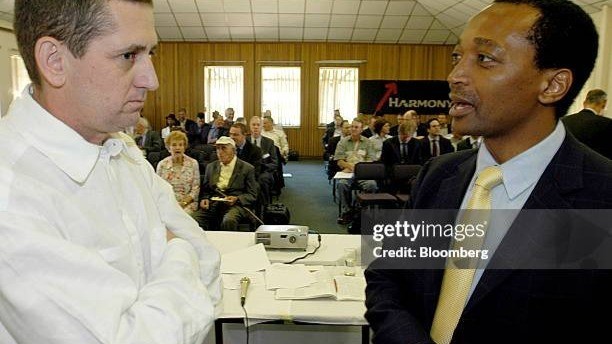
If I were to title the cover image for a magazine headline like the ‘YOU’ magazine back in the day, it would be: Legitimacy Is Never Given, It Is Endured
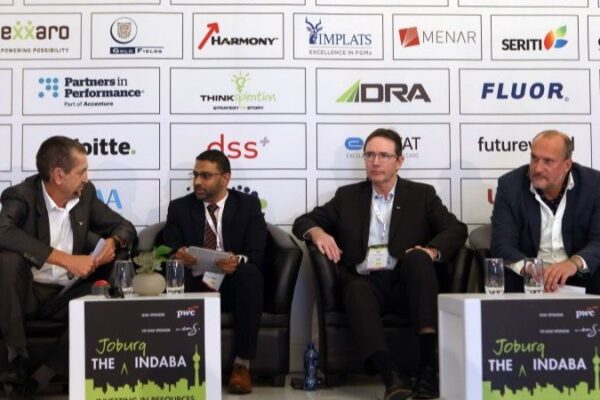
It takes me back to October 2004. Patrice and I were standing at the front of a venue. He became Chairman of Harmony two years earlier, and I was in my 9th year as CEO.
We were both younger, outwardly confident, inwardly aware that the ground beneath us was anything but stable. In the front row sat Mr and Mrs Hayden. Legendary investors, constant attendees, blunt, disruptive, and sometimes offensive. Part of the ecosystem, whether you liked it or not.
At the time, I saw that room as something to manage….Today, I recognise it as something far more formative.
Leadership does not begin with strategy; it begins with being scrutinised by people who do not owe you respect, nor do they care about your intentions. People who test your authority in public, not because they are cruel, but because that is how power systems behave.
Psychological research on leadership legitimacy consistently shows that early public testing creates deeper behavioural patterns than later success. Leaders who are forced to earn credibility under discomfort tend to develop higher tolerance for dissent and lower dependence on approval.
I did not know that then. But I lived it.
Today, in 2026, that experience still explains why I am more interested in uncomfortable questions than flattering consensus. It explains why I distrust echo chambers, and why I believe that leadership credibility must survive friction to be considered real.
Many institutions today are failing precisely because they confuse visibility with legitimacy. Likes, applause, alignment workshops…none of those replace the ability to stand in a room where you are not universally liked and still hold the line.
That lesson did not come from a book. It came from rooms like that one.
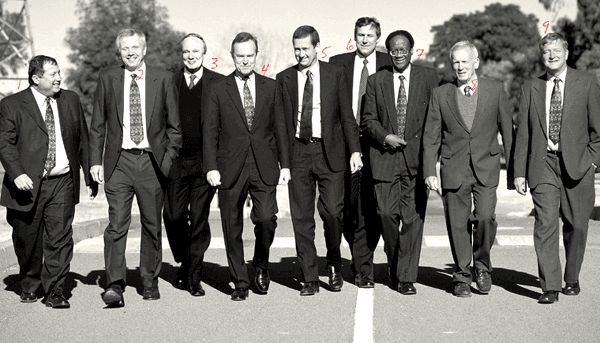
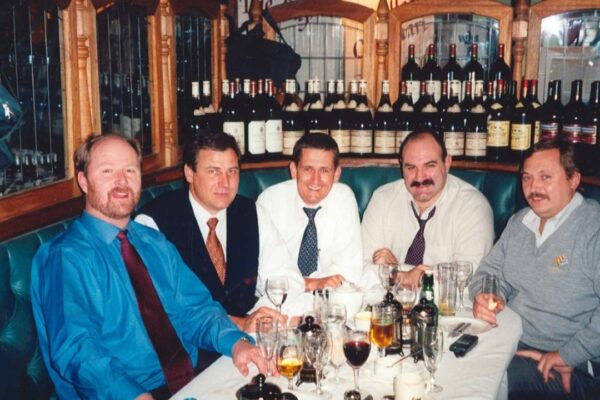
The second image (Huisgenoot title: Independence Is Messy Before It Is Mature) shows a group of men walking awkwardly during an annual report photoshoot.
Harmony had just shed the remnants of its past. Around 1997 Randgold sold its last shares, and its remaining directors resigned from our board. A new board, with new names in an entirely new era featuring: Frank Abbott, Ted Grobicki, Lord Renwick of Clifton, Adam Fleming, Ferdi Dippenaar, Gordon Sibiya, Mike Pleming, and Aidan Edwards.
It was imperfect. Unbalanced. Reflective of its time.
What matters is not how that board looks today, but what it represented back then. Independence is rarely elegant at the start. It is tentative and sometimes clumsy, and often, mismatched.
Research into organisational spin-offs and post-acquisition leadership shows that early governance structures are rarely optimal. What matters is not the initial configuration, but the willingness to change it once autonomy is secured.
That board changed dramatically, and deliberately.
The lesson for me was simple and enduring: Do not romanticise the starting point, judge leadership by its capacity to evolve. Today, many organisations are paralysed by fear of being imperfect at inception. They wait too long to move and take too long to decide or to stand on their own.
Independence is not clean. It is earned through iteration.That understanding still shapes how I assess leadership today.
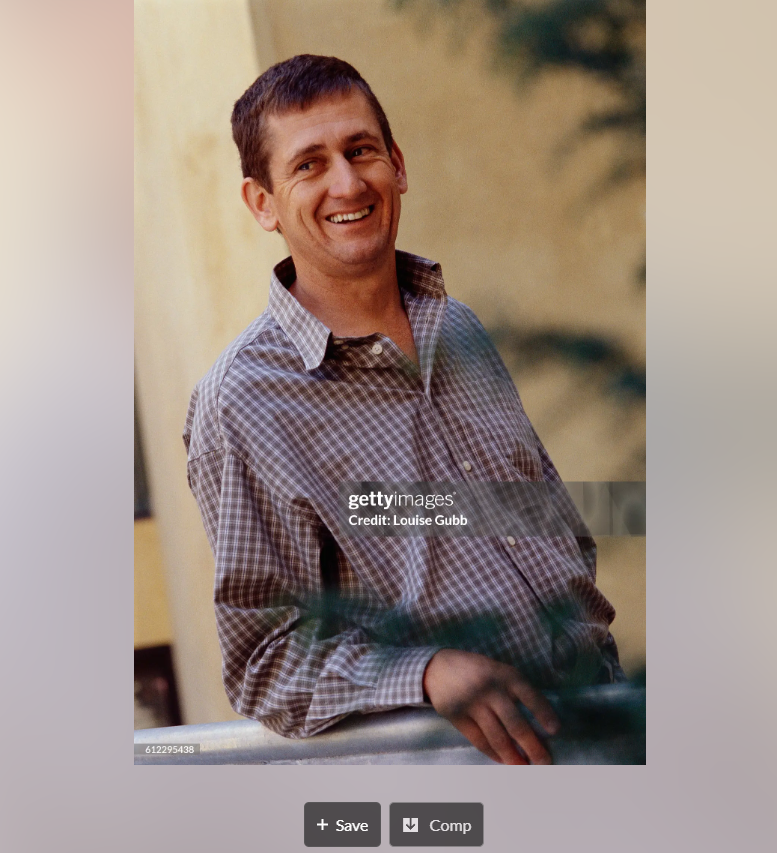
“Imposter Syndrome Is a Signal, Not a Flaw – Bernard Swanepoel Caught Serving Insecurities At Harmony Photoshoot”
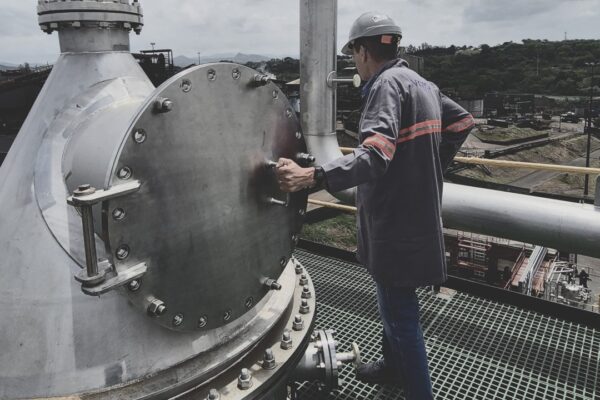
There is a photograph of me from around 1996, leaning on a handrail outside our Woodmead offices, posing for an annual report, and I remember that moment clearly.
I was in my thirties, a regular kid from Rustenburg, but somehow, the CEO of a gold mining company. I stood there deeply convinced that at any moment someone would discover that a mistake had been made.
That feeling never disappeared. What changed was how I interpreted it.
Longitudinal studies on executive development suggest that leaders who experience early imposter syndrome but remain in the role tend to develop higher self-regulation, deeper preparation habits, and lower entitlement bias later in life.
In plain language, doubt can sharpen you if you do not let it paralyse you. If imposter syndrome is real and something any self-aware leader experiences, then the choice is to try and cover it with arrogance or use it to remain humble.
That photo captures the moment I realised that confidence was not something you waited for. It was something you snatched out of thin air and made it a part of yourself instantly, even if clumsily! Then you did it again, like anything else you were trying to learn, through repetition, discipline, and a sense of responsibility.
In the last few years, certainty has been considered as overrated, and conviction matters more. Leaders who pretend to be certain are often the least prepared for disruption.
That early discomfort taught me to respect preparation over bravado.
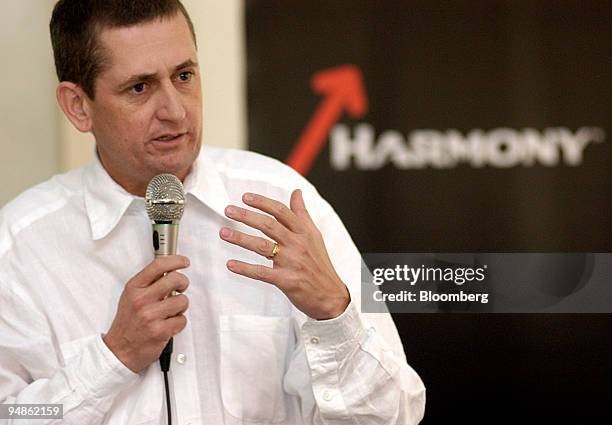
“Passion Has a Shelf Life If It Is Not Directed- Swanepoel Making Waves Splashing Around As He Tries To Swim”
The last magazine title of my youth (for this exposé anyway).
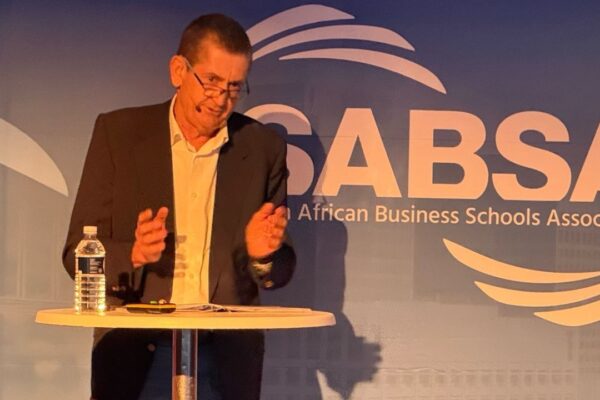
The final image shows me speaking in front of a Harmony logo, closer to the end of my tenure as CEO. I look animated and impassioned, with a strong sense of conviction. Or just argumentative and disruptive if one does not know me or understand the context.
That picture represents twelve years of intensity and an unwavering belief in mining and gold and, in the necessity of change within an industry that could not survive by repeating its past.
Passion alone is not enough. But without it, nothing meaningful moves.
That period taught me that passion must be coupled with discipline and context. Otherwise, it becomes a waste of energy.
So, Why Does Any Of This Matter Now?
Because 2026 is not a year that will reward nostalgia or reckless optimism. It will reward leaders who understand where they come from, why they think the way they do, and which of their instincts were earned versus inherited.
Looking back is not about comfort. It is about calibration. The future does not belong to those who forget their formative moments. It belongs to those who interrogate them honestly and then move forward with clearer intent.
That is the work. That is the responsibility. And that is the tone I intend to carry into the year ahead.
Welcome back ZBS Community! To another year of absolutely “Zero Bull Sht”, healthy discussions, and the willingness to learn, grow, and evolve.
~ Z. B. S







































Latest Posts