
What If The Biggest Mistake Resource-rich Countries Make Is Believing That Mining Is Where The Real Value Lies?
For as long as I can remember, South Africa has been debating beneficiation. Every few years, the conversation returns with renewed energy, usually accompanied by the comforting idea that if we simply beneficiate more of our minerals locally, prosperity will inevitably follow.
It is an attractive thought. Dig the minerals out of the ground, process them locally, and the rest of the value chain will magically appear.
Unfortunately, the world does not work like that.
In today’s geopolitical environment, minerals are not becoming “critical” because of the ore sitting in the ground. They become critical because of what happens after the ore leaves the mine gate. I argue that it is in fact never the mineral that is critical; instead, it is the materials that are made out of the minerals that are in fact critical.
Between a tonne of ore and a kilogram of battery‑grade chemical, aerospace alloy, or hydrogen catalyst sits a long and highly specialised industrial journey. That journey passes through complex midstream processing, advanced chemical refining, and ultimately sophisticated materials engineering.
Mining is simply the first step.
Of course, mining flows 10 to 20 years after exploration, but that is a topic for another day!
In many critical mineral value chains, the mining component represents only a relatively small share of the ultimate value creation. The real leverage sits in refining technology, chemical processing capability, intellectual property, and advanced materials engineering.
That is where the geopolitical competition is actually taking place.
Consider manganese, a metal South Africa produces in abundance. Historically, manganese has been associated with steelmaking. Yet increasingly its strategic value lies in high‑purity manganese sulphate used in lithium‑ion batteries. Converting ore into that battery‑grade chemical requires sophisticated chemical plants, specialist engineering expertise, and highly reliable infrastructure. These materials must meet extremely tight purity and performance specifications before they can enter battery precursor production. By the way, there is no such thing as a battery-grade manganese ore body!
The same pattern is visible in platinum group metals. South Africa mines the majority of the world’s platinum and a significant share of palladium. Yet the technological leverage increasingly sits in catalytic systems used in hydrogen fuel cells, electrolysers, and emissions controlling technologies.
Mining the metal is only the beginning. Engineering it into functional materials is where the real industrial capability lies.
A useful reality check in this debate is China.
China does not dominate critical materials because it owns the largest geological resources. In many cases, it does not. What China understood earlier than most is that control of the midstream matters far more than ownership of the ore body.
Over the past three decades, China patiently built refining capacity, chemical processing expertise, and industrial ecosystems around critical materials. Today, it processes the majority of the world’s lithium chemicals, a large share of battery precursor materials, and an overwhelming portion of rare-earth separation and refining.
In other words, China focused on the part of the value chain where technical capability compounds over time.
That did not happen because of a single industrial policy announcement. It happened through consistent direction over decades, supported by infrastructure, industrial clustering, and a willingness to invest through commodity cycles. It is a useful reminder that value in modern mineral supply chains sits where chemistry, engineering, and manufacturing meet geology.
This is why the policy reflex of simply calling for “more beneficiation” often misses the point. Beneficiation is not a destination. It is merely one step in a much longer and far more complex industrial chain.
The truly complex part lies beyond beneficiation: advanced refining, precursor materials, specialised alloys, catalytic materials, battery chemicals, and semiconductor inputs. These are the industries supplying the energy transition, modern defence systems, and increasingly the hardware infrastructure underpinning artificial intelligence.
None of these industries emerges because a policy document (or a roadmap) says that they should. They emerge through long capital investment cycles and stable institutional environments.
A refinery or specialised materials facility is not a short-term investment. It is a thirty‑year commitment. Investors in these industries are making decisions that must survive multiple commodity cycles, several governments, and many election cycles.
And this is where many resource‑rich middle powers struggle.
Political thinking tends to operate in electoral cycles, while industrial investment requires confidence measured in decades. If regulatory frameworks drift with every political cycle, the kind of long‑term capital required for midstream processing simply goes somewhere else.
In that sense, the real competitive advantage in converting minerals into critical materials is not geology. It is institutional consistency. For countries like South Africa, this raises a more interesting strategic question. If we cannot realistically dominate every stage of the value chain, where do we actually have leverage?
The answer lies in the minerals where our supply matters globally.
South Africa remains structurally important in platinum group metals, chrome, and manganese. In several of these markets, we are not merely participants – we are pivotal suppliers.
Chrome provides a good example. South Africa dominates global chrome resources and supplies a significant share of the ferrochrome used in stainless steel production worldwide. That supply position gives the country influence in a value chain that feeds global infrastructure, manufacturing, and defense industries. However, in the absence of a realistic and sustainable electricity tariff for these smelters, it will soon be another lost capacity.
Similarly, platinum group metals underpin catalytic converters, hydrogen fuel cells, and electrolysers — technologies central to the global energy transition. Despite the recent geopolitical fragmentation, platinum and palladium are still unaffected by export barriers that have become so common in all other critical minerals where there is a high supply concentration.
Is South Africa missing a strategic opportunity for geopolitical leverage?
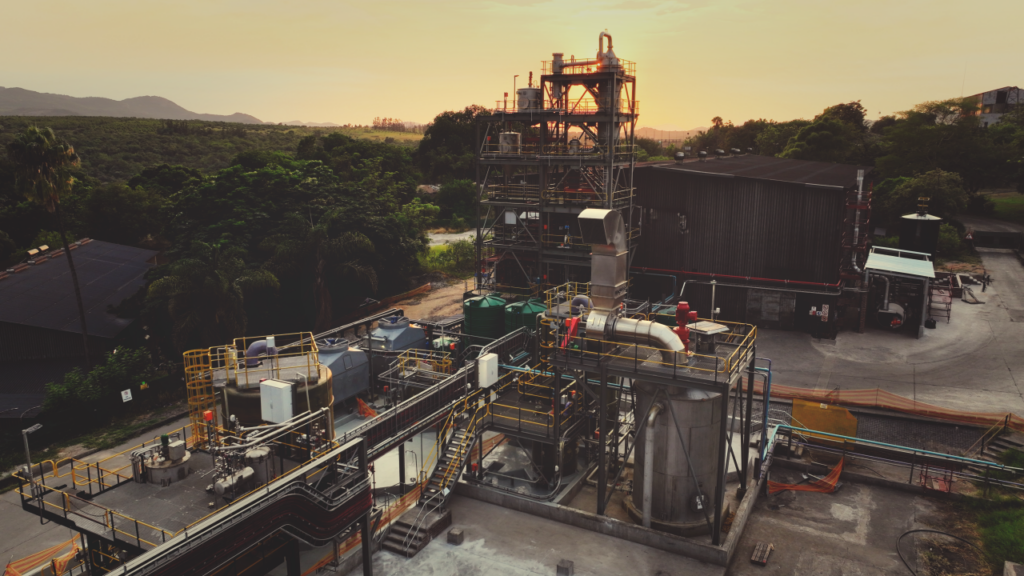
Manganese offers another strategic opportunity. South Africa holds roughly seventy percent of the known global manganese resources. We produce about a third of the high-grade manganese the world needs, in a typical pit-to-port model favored by mining companies. As battery chemistries evolve, high‑purity manganese sulphate is becoming increasingly important for certain lithium‑ion battery cathodes. MMC in Mbombela, South Africa, will be one of a few producers of this critical material outside of China.
In other words, our geological position gives us leverage. The question is what we choose to do with it.
The instinctive response in many resource countries is resource nationalism, restricting exports or forcing domestic processing in the hope of creating downstream industries. History shows that this approach rarely produces the desired outcome. This is especially an unsustainable approach where mining companies are forced into midstream processing businesses that are incompatible with their own competencies.
The smarter strategy for middle‑power resource economies is often to use supply leverage to anchor strategic partnerships further along the value chain.
In practice, this could mean long‑term supply agreements linked to processing investment, joint ventures in specialised refining technologies, or collaborative industrial ecosystems around specific materials applications.
The objective is not to force beneficiation at all costs. The objective is to position the country within durable global value chains that stretch from ore to advanced materials. In other words, leverage what we have in the ground to participate in what happens further along the chain.
But that requires something policymakers frequently underestimate, credibility over time.
Investors in complex materials industries do not respond to slogans, executive orders, or conference resolutions. They respond to signals that remain consistent across political cycles. They respond to reliable energy supply, predictable regulation, efficient logistics, and a coherent long‑term industrial strategy.
Without those foundations, the most valuable parts of the minerals to the critical materials economy will simply develop somewhere else, regardless of where the ore bodies are located.
So the question for South Africa is not whether we should beneficiate more. The real question is whether we can create the institutional stability and strategic clarity required to participate meaningfully in the critical materials economy of the next thirty years.
Because in that economy, the winners will not necessarily be those who dig the minerals out of the ground. They will be those who master the chemistry, the engineering, and the patience required to turn rocks into technology.
Oh yes, and it all needs to be funded with affordable long-term capital.
In the modern minerals economy, geology gives you the opportunity — but industrial capability captures the value.
~ Z.B.S













































Latest Posts