

What the Automotive Industry Can Teach Mining About Where Value Really Lives
Men of a certain age have an almost irrational attachment to automotive brands.
Some support car brands the way others support rugby teams. Try telling a lifelong Mercedes driver that the future of his beloved brand may depend on Chinese software and you will witness the five stages of grief in real time.
I unfortunately (or fortunately) do not share the sentiment. Anyone who has ever asked me to explain what is happening under a bonnet will quickly discover that my expertise is largely confined to appreciating the finished product. What has always fascinated me is what cars represent. They are far more than machines. They are symbols of industrial capability, technological ambition and, in many cases, national pride.
For most of my life, certain automotive brands occupied a near-mythical status. Mercedes-Benz, BMW, Audi, Jaguar, Porsche and a handful of others came to represent engineering excellence in much the same way that companies such as Anglo American, BHP or Rio Tinto became synonymous with mining. Their reputations were not manufactured by clever marketing campaigns. They were built over decades through innovation, discipline and an uncompromising commitment to quality.
That is why the developments currently unfolding in the automotive industry are so interesting. Not because they tell us something about cars, but because they reveal something important about how industries change.
There is an old saying amongst miners, that the easiest way to make a small fortune is to start with a large one.
Like many jokes in our industry, it contains more truth than most people would like to admit. Mining has a remarkable ability to humble those who assume that today’s advantage will automatically survive tomorrow’s disruption.
Over the course of my career, I have watched commodities move from obscurity to strategic importance and back again. I have seen projects once considered world-class become uneconomic and minerals once regarded as marginal become ‘critical’. In almost every case, the defining lesson was not that change arrived unexpectedly. The lesson was that many intelligent people failed to recognise where value was migrating while the change was taking place.
That thought came back to me while following developments in the global automotive sector.
Most people still view the automotive industry through a lens that would have been familiar twenty years ago. Germany builds premium vehicles. America dominates large-scale manufacturing. Japan represents reliability. China produces affordable entry-level alternatives.
The reality has become considerably more complicated.
One of the more remarkable corporate stories of the past decade has been the rise of Zhejiang Geely Holding Group. In 2010, Geely acquired Volvo Cars from Ford, a transaction that was widely viewed at the time as a Chinese company purchasing Western expertise. Fifteen years later, the picture looks rather different. Geely now controls Volvo Cars, owns a majority stake in Lotus, jointly operates Smart with Mercedes-Benz, controls Polestar and holds a significant stake in both Mercedes-Benz and Aston Martin.
The significance of these investments extends beyond simple ownership structures. They illustrate how influence within an industry can shift without attracting the dramatic headlines usually associated with industrial disruption. There was no single moment when the balance of power changed. Instead, a series of incremental decisions gradually altered the landscape.
The same pattern can be seen elsewhere.
Stellantis
, the multinational automotive group behind brands including Jeep, Fiat, Peugeot and Citroën, invested heavily in Chinese electric vehicle manufacturer
Leapmotor
and established a joint venture through which it will manufacture and distribute Chinese-developed vehicles internationally. Audi entered into a strategic partnership with SAIC to accelerate its electric vehicle programme, relying on Chinese-developed platforms to remain competitive in an increasingly software-driven market.
None of this suggests that Western manufacturers have lost their engineering capabilities. Germany still produces exceptional engineers. Italy still designs beautiful cars. The United States continues to generate world-class innovation. Yet the basis of competition has changed in ways that many established manufacturers did not fully anticipate.
For most of the twentieth century, competitive advantage in the automotive industry rested on engineering excellence, manufacturing expertise, dealership networks and brand strength. Those capabilities remain important, but they are no longer sufficient on their own. Electric vehicles have shifted the centre of gravity towards batteries, software, advanced electronics, mineral processing, supply-chain control and manufacturing scale.
In many respects, modern vehicles resemble sophisticated technology platforms on wheels.
If you’re wondering what the mining guy is doing talking about the motor vehicle industry, this is what I am getting at: China recognised this shift early and invested accordingly. (And in line with full disclosure, I just recently replaced my 3rd Toyota Prado with a
GWM Group
Tank 300)
While many competitors remained focused on the vehicle itself, Chinese companies invested aggressively across the broader ecosystem. They built battery manufacturing capacity, secured access to critical minerals, expanded processing capability and developed integrated supply chains capable of operating at extraordinary scale.
The results are increasingly visible. Perhaps nowhere is this more evident than in the democratisation of luxury.
For generations, advanced technology was one of the defining characteristics of premium automotive brands. Sophisticated infotainment systems, driver-assistance technologies, connected digital environments and cutting-edge electronics were available primarily to those willing to pay luxury prices.
That relationship is beginning to break down.

Consumers can now purchase vehicles equipped with features that would have been reserved for top-tier European sedans only a few years ago, often at a fraction of the price. Large touchscreens, advanced safety systems, over-the-air software updates, intelligent voice controls and highly connected digital ecosystems are no longer exclusive to premium brands. This presents a profound challenge for established manufacturers.
Consumers are increasingly asking a question that would have been almost unthinkable a decade ago. If a vehicle offers competitive quality, attractive design, sophisticated technology and a compelling warranty package at a significantly lower price point, how much of the premium associated with traditional brands reflects current value and how much reflects historical reputation?
Markets have a habit of answering such questions with brutal honesty. South Africa provides a useful illustration.
It was not so long ago that Chinese vehicles occupied the lower end of the market and were often dismissed as inexpensive alternatives. That perception is becoming increasingly difficult to sustain. Brands such as GWM, Chery, Haval, Omoda, Jaeco and BYD have gained significant traction among South African consumers, not simply because they are affordable, but because they increasingly compete on quality, technology and overall value.
Many consumers who would once have automatically gravitated towards established European, American, Korean or Japanese brands are now willing to consider alternatives. The conversation has shifted from whether Chinese vehicles are good enough to whether traditional manufacturers can continue justifying the premium attached to their brands. What makes this particularly interesting is that the automotive industry is experiencing exactly the kind of value migration that mining leaders should understand better than most.
One of the first lessons mining teaches is that extracting a resource and creating value from a resource are not necessarily the same thing.
Entire fortunes have been made by companies that never owned a mine, while fortunes have been lost by those who did. The industry has always been more complicated than a straightforward relationship between tonnes produced and profits generated. Logistics, processing, technology and market access matters. Above all, understanding where bargaining power resides within the value chain matters.
This is where the automotive story intersects with mining.
China’s growing influence in electric vehicles is underpinned by something far less visible than the vehicles themselves. The country processes approximately 60% of the world’s lithium, around 70% of its cobalt and close to 90% of its manganese. These are not merely statistics. They represent strategic control over critical parts of the value chain that support modern battery technologies.
Governments in Europe and North America have become increasingly aware of this reality. Legislation such as the United States Inflation Reduction Act and the European Union’s Critical Raw Materials Act reflects growing concern about concentrated supply chains and dependence on a limited number of processing jurisdictions.
For companies such as South Africa’s
Manganese Metal Company (Pty) Ltd
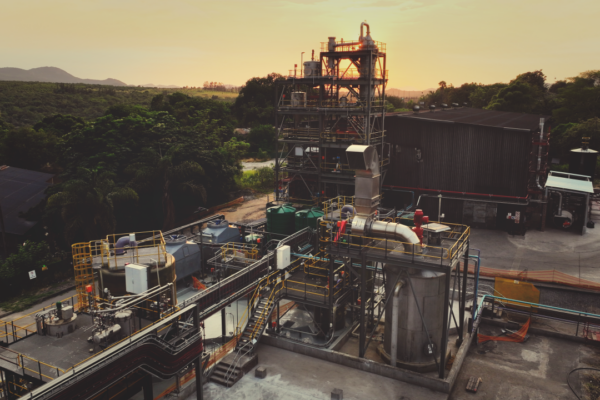
, this creates an interesting dynamic. MMC remains the only significant producer of high-purity electrolytic manganese metal outside China. In a world where supply-chain resilience has become a strategic priority, that position carries significance that extends well beyond traditional commodity markets.
What is being purchased is not simply manganese. It is optionality, is diversification, and it is resilience!
The lesson for mining is not that every company should rush headlong into beneficiation or attempt to replicate China’s industrial strategy. Such decisions require careful analysis and often involve trade-offs that are easy to underestimate.
The more important lesson is that value rarely remains stationary.
Industries evolve, technologies mature, and supply chains reorganise themselves. Competitive advantages that once appeared permanent gradually become less important, while new sources of influence emerge in unexpected places.
The automotive industry’s future will not be determined solely by who builds the best vehicles. It will be shaped by who controls the technologies, processing capabilities, supply chains and industrial ecosystems that support them. Mining now faces a remarkably similar challenge.
As governments focus increasingly on critical minerals, as processing capacity becomes strategically important and as geopolitical considerations reshape global trade, the industry would do well to ask where value is likely to reside ten years from now rather than where it resided ten years ago.
The answer may ultimately matter far more than the size of the orebody.
(We should ask ourselves, which unrelated industries could we learn from? I would love to hear what the communities opinions are on this, please share them in the comments!)
~Z.B.S








































Latest Posts