

NERSA (National Energy Regulator of SA) has approved temporary electricity tariff relief for South Africa’s ferrochrome producers, with the stated intention of protecting as many as 24,000 jobs.
Do we all agree that this announcement should be applauded by everyone who cares about jobs?
Well, no! I am not sure we should. To me, it feels like taking aspirin for a fractured leg—the actual objective matters. Saving jobs is a good thing. Jobs are important. They represent households, communities, and entire towns that exist because an employer remains viable.
Let me declare my personal interest upfront. As an owner and chairman of the board of MMC (
Manganese Metal Company (Pty) Ltd
), this is a personal matter. It does not reflect the position of MMC—these views are my own—but my interest is openly and transparently aligned.
It is precisely for that reason that I argue that this decision deserves scrutiny rather than applause. Electricity tariff relief, however necessary in the moment, is not an industrial strategy. It is an emergency measure, a holding action designed to buy time.
South Africa, however, has become far too comfortable operating in a permanent state of pause. We take painkillers when what we need is surgery.
Zero Bull Sht exists to interrogate decisions that are presented as progress but are, in reality, postponements. The News Article (linked below) reports the tariff relief accurately. It explains the mechanics, outlines the motivation, and frames the decision as a necessary intervention to prevent further closures in a struggling sector.
All of that is true.
What the article does not ask, and what Zero Bull Sht must always ask, is the harder and more consequential question: what happens when the relief expires?
If the answer is another exemption, another negotiation, or another short-term fix, then this intervention was never about securing the future of an industry. It was about delaying accountability.
The real problem did not arrive suddenly.
Ferrochrome is a marginal industry clinging to relevance. It is one of South Africa’s historical success stories, built on the world’s largest chrome reserves and decades of local beneficiation that exported value rather than raw ore. If you listen to our politicians, you would believe that this is exactly what we want as a country.
That advantage was not lost because of labour. It was not lost because of geology. It was not lost because of management incompetence. It was priced out of existence.
When electricity reaches 35–40% of total production costs, competitiveness collapses. That is not ideology or opinion; it is arithmetic. At that point, plants shut down because they must, and capital migrates because it has alternatives.
The tariff relief granted by NERSA is defensible, and in the short term, it is necessary. What is not defensible is pretending that it solves the underlying problem.
South Africa has developed a pattern. We intervene at the edge of collapse, avoid the immediate disaster, and then fail to change the system that caused the crisis in the first place. That is not industrial policy; it is crisis management on repeat.
If the state is going to intervene, then that intervention must be purposeful and effective. Relief should be linked to competitiveness outcomes, reinvestment commitments, operational efficiency, and credible plans for sustainable energy pricing. Without those conditions, the state is not stabilising industry; it is subsidising decline, delaying the inevitable.
It reminds me of the overused plot in American movies of the death row inmate getting a last-minute 24-hour stay of execution. What is the use? Well, I suppose if it is your life, then it makes perfect sense.
This is not a ferrochrome problem. This is where the article points in the right direction, but stops short. It is an electricity pricing problem, and beyond that, it is a failure of industrial energy policy.
Eskom is expected to be a commercial entity, a developmental instrument, and a political shock absorber at the same time. Eskom got caught up in the global fad of moving critical utilities onto their own balance sheets, just in time for it to become ground zero for state capture and industrial-scale corruption. We embedded all the costs associated with the sins of the past into the current cost structure, making Eskom an uncompetitive and unsustainable supplier of electricity.
This only suits new entrants. This has created a high price environment where renewables could enter the market with costs much higher than would have been achieved with an efficient Eskom as a competitor. No wonder the first few windows of our much-lauded REIPPP program made almost as many multi-millionaires as state capture.
It is not hard to argue that Eskom, as one of the critical vehicles identified to drive the ideology of a ‘Developmental State’ of the Zuma era, turned out to be the catalyst for and potentially the death knell of SA as an Industrialised economy.
So now regulators are asked to approve emergency measures while policy makers are avoiding the central question that has been postponed for years: what is South Africa’s long-term electricity pricing framework for energy-intensive industry? This pre-assumes that the stated intention to remain an industrialised economy is more than words.
Until that question is answered honestly and decisively, this story will repeat itself. Chrome today will be followed by manganese tomorrow (or, unfortunately, rather by later today), and then silicon, vanadium, and whatever sector still has the patience to apply.
Like most energy-intensive businesses, our Manganese business is an exporter of over 90% of our production. That is the value add that we as SA can do as a major producer of ore, whilst we have a tiny market for final products. Here is the issue: the need for (because of high sovereign debt) and the obsession with (because we import everything cheaper from China) a strong Rand. Because a strong Rand means that our industrial base is not going to be saved by this painkiller, a 1-year lower rate.
While South Africa negotiates exemptions and short-term relief, global competitors continue to move. Other jurisdictions offer predictable pricing, direct power contracts, and certainty measured in decades rather than regulatory grace periods. Real competition meant that in other countries, renewables came in at costs reflective of their cost base, not tied as some token (5-10%) discount to the cost of the current producers.
Capital follows certainty. Jobs follow capital. Once lost, neither is easily recovered. This moment is often described as a crisis. It is not; it is a choice.
South Africa must decide whether it wants to remain a primary exporter of raw minerals or genuinely intends to be a globally competitive, beneficiation-driven industrial economy. You cannot design policy for the first while speaking as if you believe in the second.
Tariff relief buys time, and nothing more. It is the industrial policy equivalent of a 24-hour stay of execution relief order. What matters is what we do with that time.
FACT PANEL | Ferrochrome, Electricity & Tariff Relief
- While South Africa is the dominant global producer (supplying about 40–45% of the world’s chrome ore), it actually holds the third-largest reserves globally as of current 2026 estimates, which historically underpinned a strong ferrochrome beneficiation industry. Electricity accounts for approximately 35–40% of ferrochrome production costs, rendering local smelters uncompetitive at prevailing tariffs. Multiple ferrochrome smelters have been idled or closed in recent years as a direct result of electricity pricing pressures.
- NERSA has approved temporary electricity tariff relief of approximately 12 months for certain ferrochrome producers in an effort to prevent further closures and protect up to 24,000 direct and indirect jobs. The relief is explicitly intended as a short-term intervention, pending the development of a broader funding or pricing mechanism. To date, however, no comprehensive long-term industrial electricity pricing framework for energy-intensive industries has been finalised.
- The question is no longer whether tariff relief was justified. It probably was. An obvious further question is “how was it decided to do this for these internationally owned businesses and not for others (including privately owned and SA-owned businesses)?” Big Government and Big Business in SA often declare success when their crisis intervention solves their problem, without resolving the systemic issue, leaving smaller businesses to fend for themselves. Apart from my obvious own interest in this issue, it is possible that any future investment in this sector are most likely to come from the people, not part of this emergency relief.
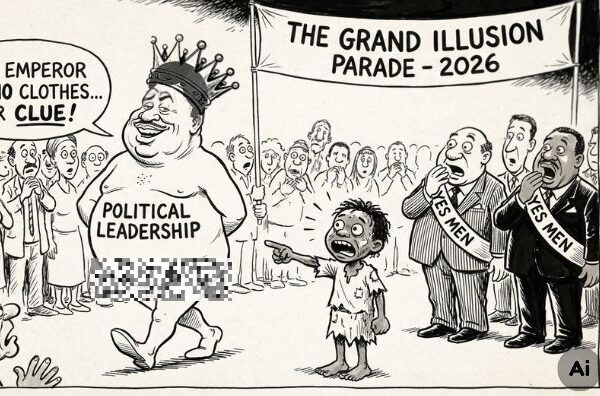
The real test is whether this moment is used to confront the hard decisions that have been deferred for more than a decade, or whether it becomes another chapter in South Africa’s long tradition of postponement dressed up as progress.
If government, regulators, Eskom, and industry do not use this window to define a credible, long-term electricity pricing framework for energy-intensive beneficiation, then this relief will be remembered not as leadership but as avoidance. Time bought without direction is time wasted.
Zero Bull Sh*t exists precisely to challenge these moments. Not to oppose intervention, but to demand accountability for what follows it. Emergency measures should come with deadlines, conditions, and consequences. If they do not, then they are not safeguards for jobs or industry; they are signals to capital that nothing fundamental will change.
The question is simple, and it is unavoidable: What will be different when this relief expires?
If there is no clear answer, then we already know how this story ends.
I welcome informed debate, uncomfortable disagreement, and practical alternatives. Because if we are serious about value-add, beneficiation, competitiveness, and jobs that endure, then the conversation cannot stop at relief. It must start with reform.
~Z. B. S































Latest Posts