
Why Energy Reality Still Beats Energy Hype
There is something quite fitting about a breakthrough involving breadcrumbs landing in the middle of Easter.
A season built on symbolism, renewal, and, if we’re honest; a fair amount of optimism. Because right now, the global energy conversation feels exactly like that: inventive, hopeful… and occasionally detached from the physics and economics that actually keep systems running.
A recent piece published by Live Science highlights a genuinely interesting development in chemical engineering: the ability to produce hydrogen from biomass waste, including food residues like breadcrumbs, under relatively mild conditions. It is clever science. It points to a future where waste streams could become energy inputs, where hydrogen production becomes more distributed, and where the circular economy moves from theory to application.
But we need to be careful not to confuse a reaction with a system.
What has been demonstrated is a laboratory-scale process with promising efficiency characteristics. What has not yet been demonstrated is the ability to scale that process economically, secure sufficient and consistent feedstock, integrate it into existing energy infrastructure, and compete with established energy pathways on cost, reliability, and volume.
Hydrogen, regardless of how it is produced, still faces the same structural constraints: it is expensive to store, difficult to transport, and dependent on an ecosystem that does not yet exist at meaningful scale. And that is where the global narrative begins to drift from reality. Because while the world is understandably excited about future energy solutions, whether it is the Hydrogen economy, synthetic fuels, or other low-carbon pathways—there is a far more immediate and less glamorous conversation unfolding much closer to home.
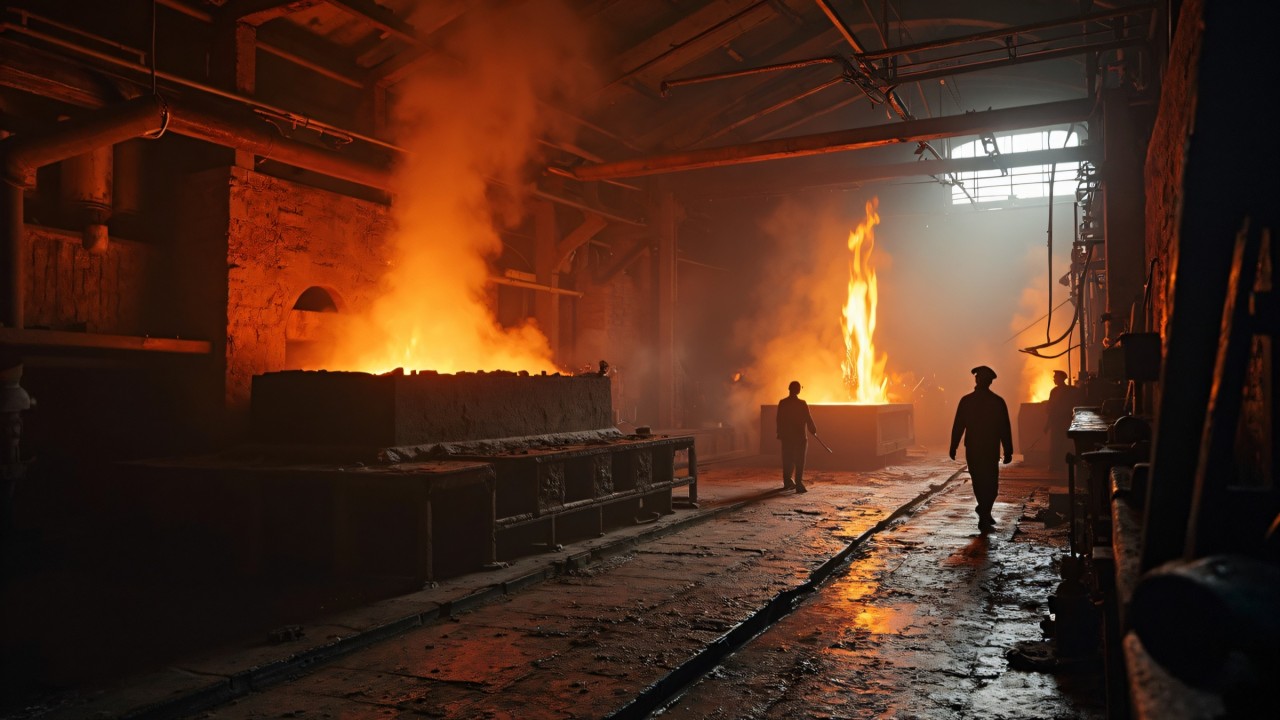
It is about electricity. Pricing. Smelters. And whether South Africa still intends to remain an industrial economy.
As outlined in the current discussion , the debate has predictably polarised. On one side sits the argument that discounted electricity tariffs for smelters represent an unjustifiable subsidy in a country where households and small businesses are already under pressure.
On the other sits the equally uncomfortable reality that without competitive electricity pricing, energy-intensive industries simply cease to exist, taking jobs, export revenue, and industrial capability with them.
The numbers themselves are not in dispute.
Eskom’s average tariff is approaching 196 c/kWh, while proposed smelter tariffs sit closer to 62 c/kWh. At face value, that gap appears indefensible. But electricity systems do not operate on averages; they operate on marginal cost and system utilisation. If the incremental cost of supplying additional baseload power from an already running fleet is below that level, then selling at 62 c/kWh is not irrational, it is, in fact, economically coherent.
The real issue is not whether the pricing looks fair. It is whether the system as a whole remains viable.
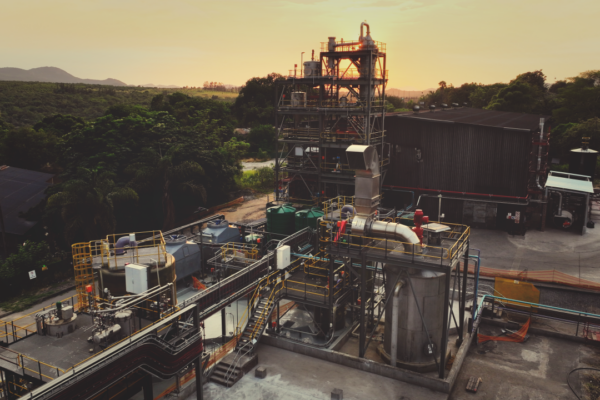
And this is where the hydrogen narrative becomes relevant, not as a solution, but as a contrast. Because it highlights a growing tendency in energy discourse to focus on future possibilities while underestimating present constraints. You cannot run a smelter on potential. You cannot stabilise a grid on innovation pipelines. Industrial systems require continuous, predictable, large-scale energy, delivered reliably and priced competitively.
At present, hydrogen, whether derived from electrolysis, fossil fuels, or indeed breadcrumbs, does not meet that requirement.
Even the most optimistic projections from organisations like the
International Energy Agency (IEA)
suggest that hydrogen will scale meaningfully over decades, not years. In the meantime, industries either survive within current energy realities, or they disappear.
South Africa finds itself in a particularly uncomfortable position within this global transition. We are richly endowed with the very minerals, particularly PGMs, that underpin hydrogen technologies and fuel cell development, yet we are simultaneously struggling to provide stable and affordable electricity to the industries that mine and beneficiate those resources.
We are, in effect, exporting the building blocks of the future while eroding the foundations of the present. It is a contradiction that cannot hold indefinitely.
The temptation, particularly in moments like Easter when the narrative leans toward renewal and possibility, is to look for breakthrough solutions, something transformative that allows us to bypass the difficult trade-offs.
The breadcrumb-to-hydrogen story fits that narrative neatly. It suggests that innovation will rescue us, that technology will close the gap between sustainability and affordability without requiring hard choices. But energy systems do not behave like that.
They behave more like the Duracell analogy, quietly reliable, chemically consistent, engineered for predictability rather than novelty. The reason those systems work is not because they are exciting, but because they are proven, scalable, and integrated into a functioning ecosystem.
That is the benchmark we should be applying.
Which brings us back to the core tension we continue to avoid. South Africa is attempting to achieve three objectives simultaneously: cost-reflective electricity pricing, a financially sustainable Eskom, and a competitive industrial base.
In practice, we can optimise two, but not all three at once. Every decision we make, whether explicit or implicit, represents a trade-off between them. Discounted electricity for smelters can be justified within a marginal cost framework and defended as industrial policy. But it becomes problematic when it is opaque, permanent, and disconnected from performance.
Equally, a rigid commitment to cost-reflective tariffs, applied without regard for industrial competitiveness, accelerates deindustrialisation under the banner of economic purity. Neither extreme is sustainable.
What is required is not consensus, but clarity, clarity about what we are prioritising, why we are prioritising it, and who ultimately carries the cost.
Because if we fail to get that right, the consequences will not be theoretical.
They will show up in shuttered plants, lost jobs, and a continued shift from value-added production to raw material export. And by the time hydrogen from breadcrumbs, or any other breakthrough becomes commercially viable at scale, there may be very little industrial base left to take advantage of it.
Innovation matters. But sequencing matters more.
Right now, the far more urgent question is not how we power the future. It is whether we are prepared to make the necessary, and often uncomfortable, decisions to sustain the present.
Clarity beats optimism.
Every time.
~ Z.B.S






































Latest Posts