

My first draft of this ZBS was done last Saturday. And here we are, 4 days later, and I am still mulling on this topic. Thank goodness for a public holiday today, else this would probably only have seen the light of day after early October’s Joburg Indaba.
So what did I conclude after all this procrastination, thinking, and reflecting on the issue of leading without a job title?
There’s a world of difference between managing people and leading them. I know, WOW! You knew that the entire time!
I’ve spent enough years leading and managing teams, from underground stopes to boardrooms, and more than a few long nights pondering this, to know that leadership and management are often conflated, but while they overlap, they are not the same thing.
Here is my take on where management and leadership overlap and where they differ.
Where they overlap:
- Both are about getting things done through people.
- Both require effective communication, sound decision-making, and personal accountability.
- Both depend on trust and credibility. Without that, neither managers nor leaders get followership.
- Both must balance short-term performance with long-term sustainability.
Where they differ:
- Leadership is about direction, vision, and inspiration. It asks: “Where are we going, and why should anyone follow?
- Management is about execution, structure, and control. It asks: “How do we get there efficiently, on time, and on budget?”
- Leaders thrive in ambiguity. Managers thrive in clarity.
- Leadership is about people and influence; management is about systems and processes.
- Leaders can be without formal authority, and managers rely on their authority to get compliance.
Clearly, one without the other doesn’t work: leading without managing is dreaming, but managing without leading is bureaucracy!
If I were to look at some “lessons from my own missteps”, it would sound something like this:
In my early career, I thought I had leadership nailed. I could run numbers, issue instructions, and hit production targets. After all, it is one’s ability to manage that gets you promoted to where you need to lead more and more. But when the tough days came, mine shutdowns and retrenchments, safety incidents, crises, the Harmony–Goldfields saga… I realised I was managing, not leading.
- I avoided difficult conversations to keep the peace.
- I mistook authority for respect.
- I believed that growth came from clever deals, not from growing people.
Those failures hurt. They also forced me to grow as a leader, to listen more than I spoke, and to stay humble.
Real leadership starts the moment you admit you don’t have all the answers. It is a pity that I only found the humility to admit that I don’t know it all much easier as I was getting older (and hopefully wiser).

A tough lesson to learn was that your bad decisions cost you, your team, and your company.
True leaders make calls that don’t always win applause. Cutting a project today to save the company tomorrow. Calling out unsafe practices even when it delays production. Backing a young person who shows promise over a comfortable hire.
These choices carry weight because they shape lives and livelihoods. I see many people who think leadership is about the title, who’ll dodge the tough decisions. If you lead to build something bigger than yourself, you’ll face them head-on.
A few weeks ago, my wife
Tracey Swanepoel
, and I were privileged to attend
Neal Froneman
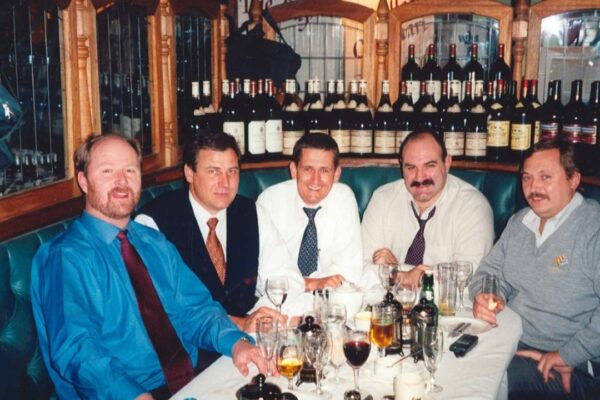
‘s industry Farewell. I met Neal 30 years ago as a colleague and as a competent manager. It was absolutely amazing to hear his team speak about him as a kind and capable leader.
It got me thinking about why kind and capable leaders matter.
Research proves it:
- Gallup (2023): “According to Gallup’s longstanding research, most recently reiterated in 2023, teams led by highly engaged and empathetic managers are 21% more profitable and 17% more productive than disengaged ones.”
- Research from Accenture, featured in Harvard Business Review, found that companies in the top quartile for inclusive leadership outperform peers by up to 29% in revenue per employee.
- Extensive research from firms like Deloitte and PwC confirms that a significant majority of younger workers prioritize ethical leadership and clear growth opportunities, and are highly likely to leave employers who fail to provide them.
- Kindness isn’t softness. It’s a smart strategy. A leader who genuinely wants their people to succeed creates loyalty, innovation, and results no spreadsheet can capture.
My Challenge to Today’s Leaders
- Educate Yourself Relentlessly. How else will you grow? Read, listen, seek dissent.
- Stay Humble. Power is rented, not owned.
- Measure Your Success by Others’ Growth. If your people aren’t moving forward, you are not yet a leader.
The mining industry, and South Africa, doesn’t need more managers guarding turf.
It requires leaders willing to make hard calls with a steady hand and an open heart. Some of my greatest mistakes have helped me grow as a leader. Some of my proudest moments come when people like Neal credit my role in their leadership growth.
We can learn how to lead, good and bad, from others. But we can also learn from our own experiences and mistakes. I hope that I will leave a far better impression/guidance/ lessons than the ones I got from some of the leaders who came before me.
Only the fittest survive in business. But “fit” today means adaptable, transparent, and human.
That’s my take. What’s yours?
Share your thoughts, because a leader worth having should be a conversation, not a monologue.
– Z.B.S













































Latest Posts