
And, “Should I?”
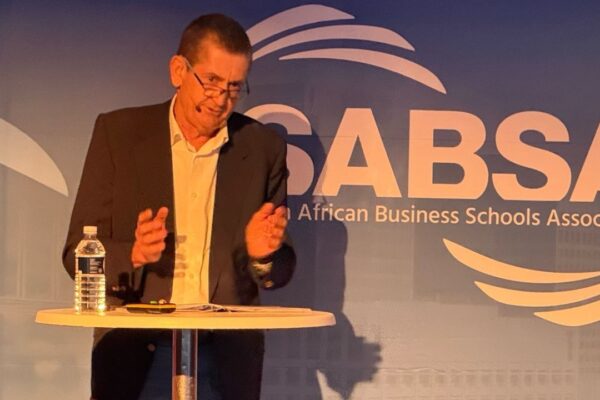
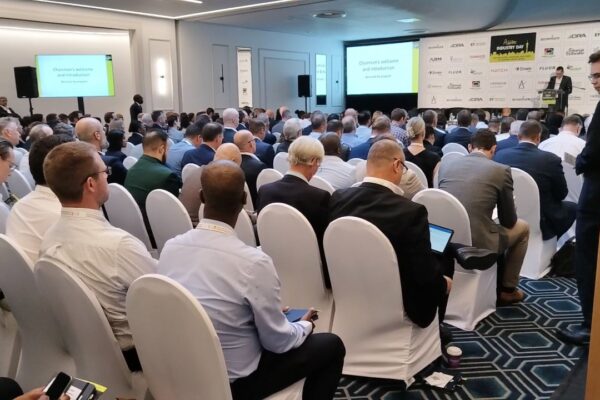
Recently, I had the privilege of delivering the keynote address at the
WITS School of Mining Engineering
130th anniversary celebration.
130 years, just think about that.
For more than a century, this institution has produced engineers who helped build mines, companies, communities and, in no small measure, the South African economy. The theme of the evening was Honouring our 130-year legacy, mining the future. It got me thinking. Not so much about the past, but about the future. And, perhaps unexpectedly, about my own son.
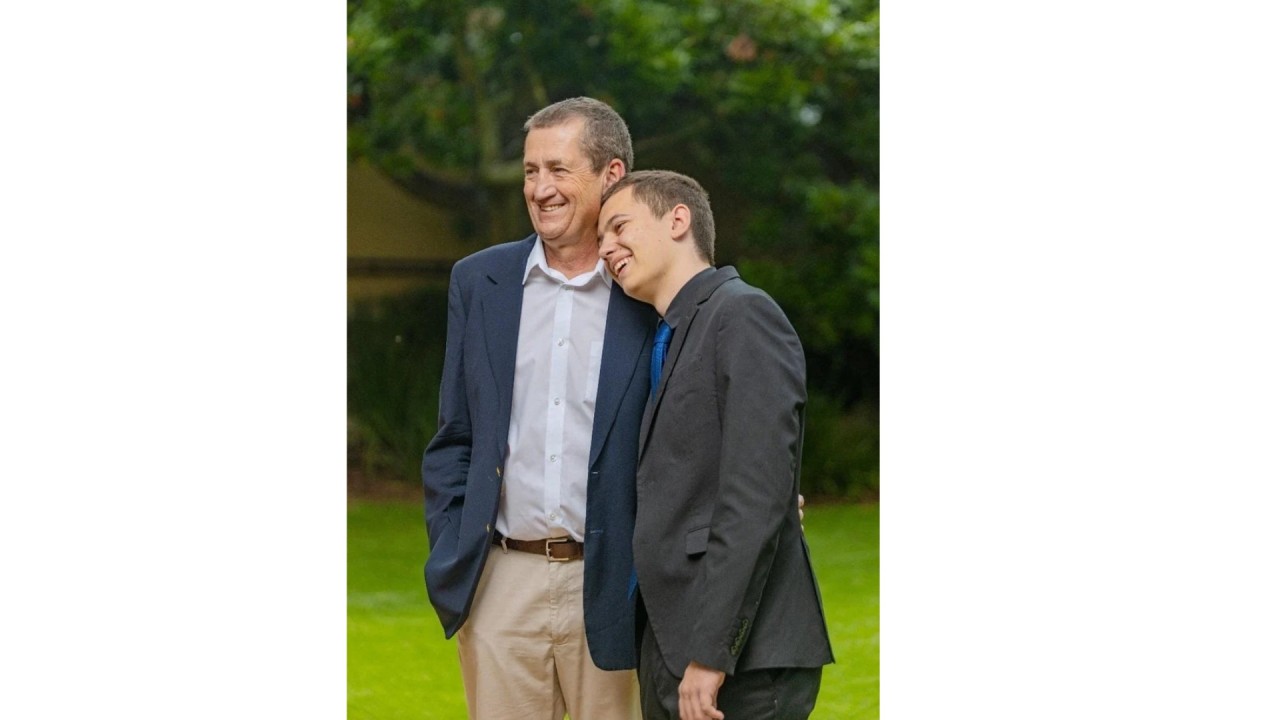
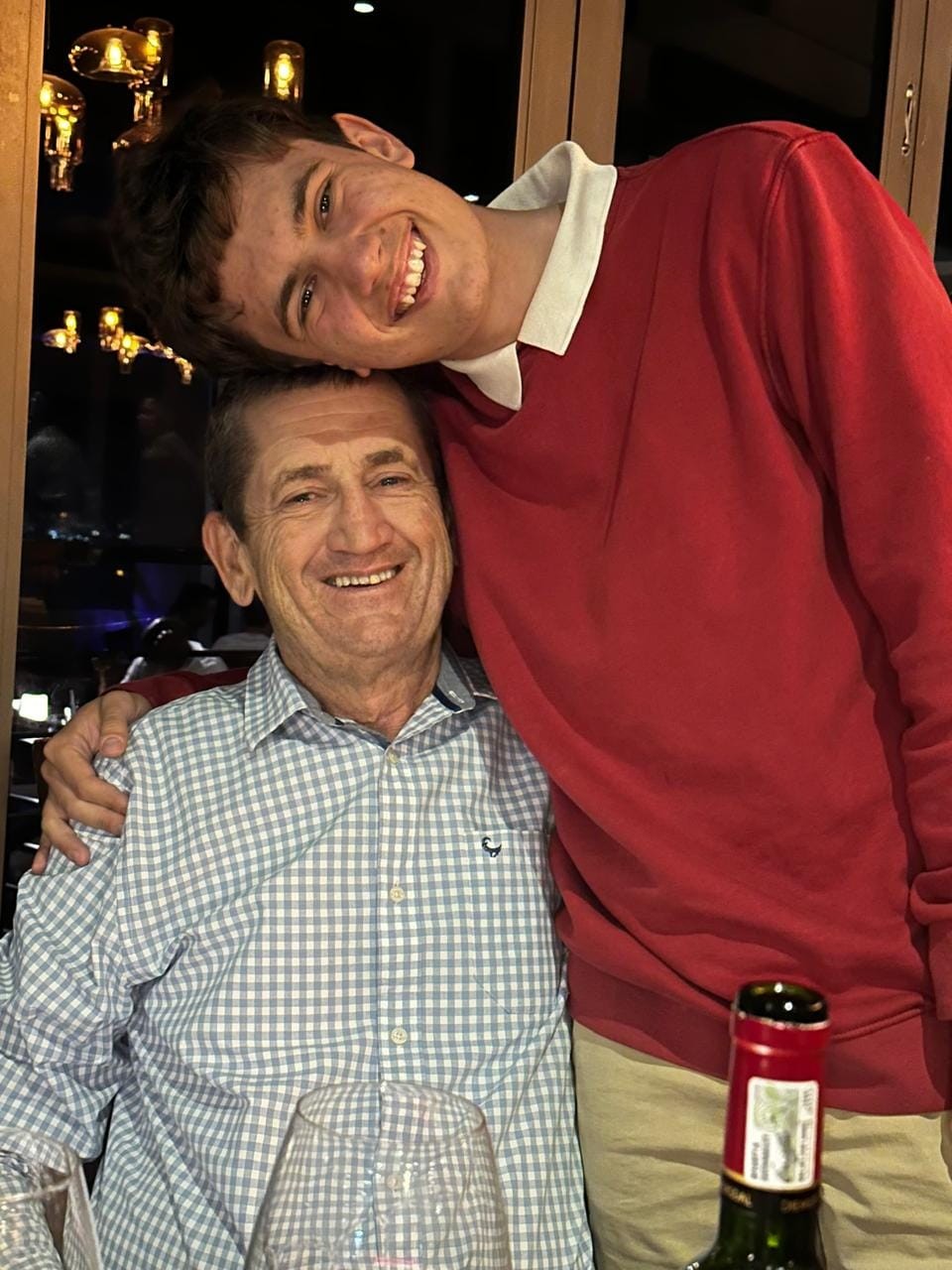
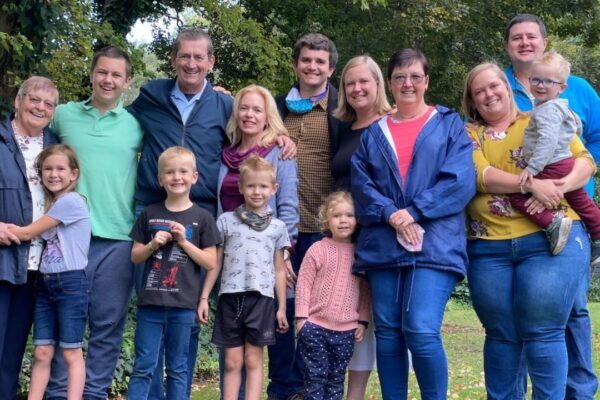
Zack is studying mechanical engineering. He is exceptionally talented, technically curious, and excited about what engineering can make possible. But he doesn’t dream about mining; he dreams about space, rockets, and the extraordinary engineering challenges of getting things off this planet and into the universe.
I can’t blame him.
Frankly, if I were his age, I might find that pretty exciting too. But it left me with an uncomfortable question: after spending much of my working life in mining, why does my own son see his engineering future somewhere else? And what does that tell us about the industry I have spent so much of my life defending, promoting, and occasionally criticising? Is it the industry itself, or the industry we have created?
Or is it perhaps, something I did, or should have done?
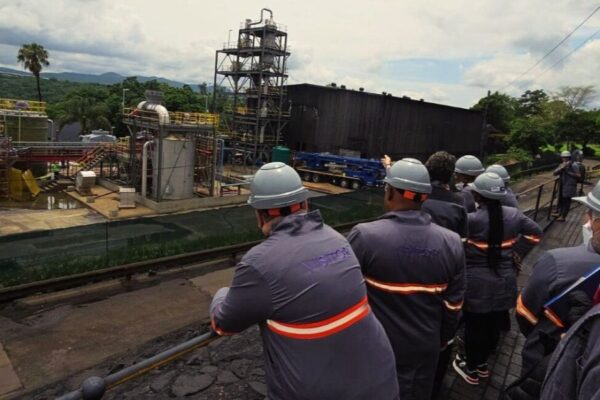
Mining is an extraordinary engineering undertaking. We operate enormously complex systems, often kilometres underground, under extreme physical conditions. We move mountains, literally. We manage massive flows of energy, materials, water, information, and capital. Increasingly, we will need robotics, artificial intelligence, autonomous systems, advanced materials, and technologies that haven’t yet been invented. There is no shortage of interesting engineering problems, so why do rockets seem more exciting than rock faces?
Perhaps it is partly about the story we tell.
Space is presented as the future, while mining is too often presented as our past. Space is about exploration, discovery, and doing what has never been done before. Mining is about production targets, cost curves, safety statistics, and squeezing a few more years out of ageing assets. Hardly a fair comparison, but I wonder whether it is how many young engineers see us. Before we blame them for not understanding our industry, perhaps we should ask whether we have done a particularly good job of explaining it or…more uncomfortably, whether the problem goes deeper than the story we tell.
Much of mining’s organisational DNA comes from an earlier industrial age. We have ranks, reporting lines, command structures, and clearly defined authority. General managers, managers, superintendents, and supervisors. Everybody knows their place, and there are good reasons for this. Mining is dangerous, decisions have consequences, and accountability matters, a badly coordinated operation can cost lives! I am certainly not advocating that we replace operational discipline with organisational anarchy.
But have we confused discipline with hierarchy, accountability with authority, and experience with wisdom? A young engineer joins an operation bursting with ideas, curiosity, and an understanding of technologies that some of us older hands barely comprehend. And what do we tell work around them? First learn how things here; respect the hierarchy; get some experience; wait your turn. By the time we finally decide they have earned the right to challenge the system, have we trained the curiosity out of them, or have they simply left?
We tell young people they are the future of mining, and then we ask them to spend the first decade of their careers behaving like its past. I suspect there is more truth in that statement than many of us would care to admit.
I have been involved in more conversations about leadership succession than I care to remember. We invariably agree that the next generation must be different: More technologically literate, more innovative, more collaborative, and better equipped to deal with complexity and change. They need operational experience; they need to have managed large teams; they need to understand how the organisation works; ideally, and they should have spent twenty years learning the business. In other words, we want people who can lead a very different future, provided they have spent enough time becoming like us.
There is a rather obvious contradiction here. Experience is enormously valuable, particularly in an industry where mistakes can be fatal. But experience also reinforces the assumptions on which our success was built, and success can be a particularly effective enemy of curiosity. We become very good at solving the problems we recognise, using methods we understand, within structures we helped create.
Unfortunately, the future is under no obligation to resemble the past. I don’t know exactly what a mine will look like thirty years from now, and I suspect, that nobody else does either. But I am reasonably confident that it will be very different from the mines on which many of us built our careers. So why are we so determined to select its future leaders primarily on their ability to demonstrate competence in yesterday’s industry?
There is another reason this matters, beyond attracting and retaining young talent. Mining’s challenges are becoming more complex, more interconnected, and less amenable to solutions from any single discipline.
Consider something as seemingly straightforward as deciding how to power a mine. It is no longer simply an engineering or procurement decision. It involves energy economics, technology, capital allocation, environmental obligations, regulation, community interests, and long-term competitiveness. Or consider the future of a deep-level mine. The answer may involve mining methods, robotics, geology, data science, workforce skills, industrial relations, and an entirely different approach to organising work. No individual, however experienced or talented, can reasonably claim to understand all these dimensions.
Yet we continue to organise many of our businesses around functional silos, hierarchical reporting lines, and the assumption that the most senior person in the room should have the best answer. Perhaps the greatest limitation of the traditional mining hierarchy is not that it gives too much authority to experienced people, but that it can give too little influence to people with different expertise.
The experienced mine manager understands operational realities that no computer model can teach, the young data scientist may recognise patterns nobody has previously seen, and the environmental specialist understands emerging constraints, while the commercial person sees how markets are changing. None has the complete answer. The challenge is to bring these perspectives together, not decide which one should dominate. The future of mining will not be invented by the cleverest person at the top of the hierarchy; it will be created by teams of people who know different things, working together on problems none of them can solve alone.
And that requires a different kind of leadership.
Accountability is not the same as having all the answers. We sometimes create a false choice between empowering younger people and maintaining operational accountability. There is no reason why a mine manager cannot remain fully accountable for safety, production, and major decisions while creating an environment in which younger colleagues genuinely influence those decisions. Being accountable for a decision does not mean you are entitled to have all the answers. In fact, the more complex the decision, the more important it becomes to draw on expertise beyond your own.
But that requires confidence: The confidence to listen to someone half your age who understands a technology better than you do, to allow established assumptions to be challenged, to test an unfamiliar idea rather than dismiss it because it came from someone without the right title, and perhaps most difficult of all, to surrender some of the influence and status that traditionally accompany seniority.
We talk endlessly about empowering the next generation. But are those of us currently in charge genuinely prepared to surrender some control, status, and certainty to make that empowerment real? Or do we want young people to innovate, provided they don’t disturb the way we run things? There is a world of difference between inviting younger people into a meeting and allowing them to influence what happens afterwards. The first is relatively easy; The second is where leadership gets tested.
When I started my career, I believed that being a good mining engineer was largely about becoming technically competent…Understanding the rock, the process, production, and solving problems better and faster than the next person. Technical competence mattered, and it still does! It earns credibility, gets you noticed, and creates opportunities.
But somewhere along the way, I discovered something important: The skills that got me into leadership were not necessarily the skills that made me effective as a leader.
As my responsibilities grew, the problems became less technical and more human. I had to learn to work with people who didn’t report to me, influence decisions I couldn’t command., and to understand interests that didn’t neatly align with mine. I had to learn that being right was not the same as being effective, and that having authority did not automatically make me a leader.
Some of the most important changes required me to question the very systems in which I had succeeded.
I wish I could claim I understood all this early in my career. I didn’t.
Like many technically trained executives, I probably spent too much time believing that a sufficiently good answer, delivered with sufficient conviction, would solve most problems. It took experience, mistakes, and a few uncomfortable lessons to discover otherwise. Perhaps the most important leadership skill is not knowing more than everybody else; it is knowing how to bring out the best of people who collectively know far more than you do. And perhaps we should start developing that skill long before people reach the executive floor.
There is a popular refrain at mining conferences that the young people entering the industry today will transform it. I have probably said something similar myself, but I am beginning to think we have the sequence wrong. We imagine that young people will join the industry, learn our ways, acquire experience, rise through the ranks, and eventually transform it. What if, by then, they have become so thoroughly socialised into the existing system that they no longer see the need to change it? Or, more likely, what if the most curious, ambitious, and independently minded have already gone somewhere else?
We cannot rely on the next generation to reinvent an industry they never join, nor can we expect them to remain long enough to change it if their early experiences consist mainly of learning to fit in. The answer is not to promote inexperienced people into positions of authority for which they are unprepared, but to give them opportunities to contribute meaningfully much earlier.
Put young engineers, data scientists, environmental specialists, experienced operators, and commercial people together to solve real problems. Give them access to information and allow them to challenge assumptions. Give their ideas a fair hearing and the opportunity to be tested. Make sure a good idea doesn’t have to survive seventeen layers of approval simply because it came from someone without the right title. Let experienced leaders retain accountability for the decisions that matter, while making them responsible for creating teams capable of producing better answers than they could generate alone.
That seems to me a more practical approach to empowerment than another leadership development programme promising that today’s graduates will become tomorrow’s leaders. Why not give them an opportunity to help lead change today?
Back to Zack, and the next 130 years…

It is easy for someone of my generation to lecture young people about the importance of mining. We can point to its contribution to economic development, employment, infrastructure, and the materials required for modern civilisation. We can explain that there are no electric vehicles, renewable energy systems, data centres, or rockets without mined materials. It is all true.
But being indispensable does not automatically make an industry attractive. And reminding young people that society needs mining is not the same as giving them a compelling reason to build their careers in it.
I have no intention of persuading Zack to abandon his interest in rockets and come into mining. I want him to follow his curiosity, develop his talents, and find work that challenges and excites him. In fact, perhaps mining could learn something from what excites him about space. The possibility of doing something nobody has done before, and the excitement of combining different disciplines to solve seemingly impossible problems! Taking the opportunity to work with people who are not simply trying to do yesterday’s work a little more efficiently but imagining an entirely different tomorrow. Mining has all those possibilities!
We just don’t always organise ourselves, or tell our story, as though we believe it.
As I reflected on 130 years of mining education at Wits, I was reminded that the greatest contribution of an institution is not simply the knowledge it passes from one generation to the next. It is the ability of each generation to question, improve, and sometimes discard what the previous one believed to be true.
We owe an enormous debt to the generations of engineers and miners who built what we have today. But honouring their legacy cannot mean insisting that tomorrow’s engineers think, work, and lead as they did.
Perhaps the greatest legacy my generation can leave mining is not the mines we built,but our willingness to let the next generation build something fundamentally different. And perhaps the real test is not whether I can convince my son to become a mining engineer. It is whether we can create a mining industry that someone like Zack would find as exciting as building rockets.
Now that would be a future worth mining.
~ Z. B. S.





































Latest Posts