

When Having So-Called Influence Does Nothing For Humanity
My youngest child is about to turn 21.
I look at Zack and often wonder where this particular human being came from. I can see plenty of his mother in him, fortunately, but there is a positivity, hopefulness and self-confidence with which he seems to move through life that I find both impressive and deeply unsettling.
His childhood was different from that of his two older sisters. By the time Zack arrived, I was at a very different stage of my career, and our family was in a very different financial position. Things that might not have been readily available to my girls were simply there for him. That is not an uncomfortable family secret or some profound revelation about parenting; it is simply the truth.
What fascinates me is that having wanted for very little has not made him particularly complacent. When an opportunity appears, he grabs it with both hands. His ambition has an urgency to it, but it is not the desperate urgency I remember from my own younger years. There is a strange confidence behind it, almost as though he assumes that if something is worth doing, there is probably a way of doing it, and he has not yet accumulated enough evidence from life to convince himself otherwise.
Perhaps that is youth. Perhaps it is privilege. Perhaps it is simply Zack.
What I envy most is that he seems considerably less burdened by all the complications the rest of us accumulate as we get older: what people might think, whether somebody will misunderstand our intentions, whether we have the authority to interfere, whether we are being insensitive, whether it is really our place to say something, and whether somebody else is better qualified to do it.
Which brings me, by a very long route, to something that has been bothering me.
When I called this newsletter Zero Bull Sh*t, I did not mean only everybody else’s bullshit. I was always supposed to remain somewhere near the top of the list.
I have spent most of my adult life in positions that come with some degree of power. Sometimes it’s formal authority, sometimes it is because of reputation, access or simply knowing enough people to get a telephone call returned. I have run companies, chaired things, sat around tables where very large decisions were made and, over time, become one of those people whose opinion occasionally seems to carry more weight than I necessarily think it deserves.
After enough years of that, I suspect one begins to absorb the environment.
People ask what you think should happen. They invite you into rooms because they believe you can contribute to changing something. Younger leaders ask for advice. Journalists call, policymakers listen, occasionally, and people introduce you using words like leader, veteran, industry doyen, change-maker and all the other labels that slowly create the impression that you occupy some elevated position from which the machinery of the world is more accessible to you than it is to everybody else.
To some extent, that impression is true.
There are things I can do today that the 21-year-old version of me could not have imagined. I can put people together who might otherwise never meet and I can get an idea in front of somebody with capital, authority or technical expertise. I can pick up a phone and reach people who run significant organisations, I have accumulated nearly five decades of relationships and , whether I particularly enjoy admitting it or not, that does amount to influence.
The problem comes when life presents you with something for which none of those things seem particularly useful.
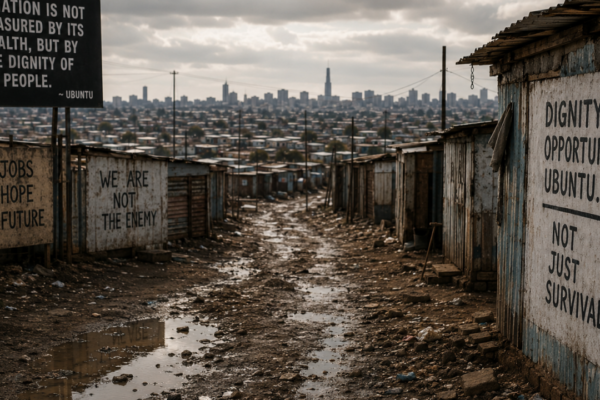
A little while ago, on a trip to Cape Town, I found myself challenged by the visibility of homelessness which I saw everywhere. Inside our rented apartment there was warmth, food, comfort and more than enough of everything we needed. Outside were people sleeping on the street who had almost nothing.
Their presence was upsetting the residents and they were being moved.
I understood why the residents were frustrated. In the moment I was almost relieved that they were ‘disappeared’. Homelessness does not arrive neatly packaged as an abstract social issue. There are legitimate questions around sanitation, safety, public space, drugs, crime, mental illness and the rights of the people who live and work in an area. I would be dishonest if I pretended that any of those concerns disappear simply because the human beings at the centre of the problem are poor.
But standing there, looking from one world directly into another, something about the imbalance became almost impossible to intellectualise.
I was warm…and they were not. I had somewhere safe to sleep, but they did not. If somebody moved me from that building, I could book another room, phone somebody, rent a car, buy a ticket or go home. If somebody told the people outside that they could no longer sleep where they were sleeping, I had absolutely no idea where they would go.
And suddenly all the things that normally make me feel reasonably capable seemed astonishingly irrelevant. That was the part that bothered me most.
We spend our lives building competence within particular systems, and if we are fortunate or stubborn enough, eventually those systems begin to respond when we push them. A chief executive can change a company, a minister can alter policy, an investor can move capital, and an entrepreneur can build something that did not previously exist. Within those environments, power feels tangible because there is a lever somewhere and, if you are senior enough, you may have your hand on it.
Then you encounter a problem whose lever you cannot find.
I could not make those people safe by issuing an instruction. I could not restructure their lives, manufacture housing, repair whatever series of events had brought each individual to that pavement or solve the enormous economic and social systems sitting behind the scene in front of me.
For all the influence I supposedly possess, I was simply a man standing comfortably behind in my apartment watching something deeply uncomfortable happen on the other side.
That is a surprisingly humbling place to find oneself.
It also made me question something I had probably accepted far too casually over the years, which is the idea that influence and power are interchangeable. They are not. Power is often very specific to the system in which it has been granted, while influence tends to travel further but becomes less certain the further it moves from the source.
I may have enormous influence within parts of the mining industry and almost none over the circumstances of the person sleeping underneath a piece of cardboard a few metres away from me.
Some time ago, somebody asked me what my capabilities truly were when it came to making a sizeable difference in this industry. Could Bernard Swanepoel get a bill passed? Could I force an organisation or government department to implement something that had been discussed for years? Could I make an institution change course simply because I thought it should?
The honest answer was and still is no. At the time, I found the answer mildly irritating. Now I think I understand it better.
There are people with more formal authority than I have, people with more money than I have, people with specialist knowledge I will never possess and people working inside systems that I can only influence from the outside. My supposed power is therefore far less impressive when measured against the scale of the problems we so casually talk about solving. That does not mean it is worthless.
If anything, recognising its limits may make it more useful because it forces a different question.
Instead of asking whether I personally have enough power to change something, perhaps I should be asking whether I know enough people whose different forms of power, combined, could. That feels like a much more honest understanding of what influence actually is, (or the type of influence I possess at the very least).
I cannot get a bill passed, but I know people who understand the legislative process far better than I ever will. I cannot command government, but I know people who have spent their lives working within it! I cannot solve every technical, social or institutional problem facing this country, but after nearly five decades in mining I know an extraordinary number of people who can solve very specific parts of them.
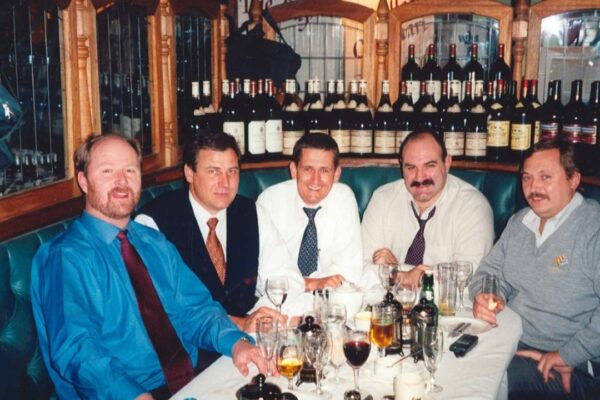
Many of those people also know one another because we have spent half a lifetime appearing on the same programmes, sitting on the same boards, fighting over the same issues and occasionally sharing the same bottle of wine afterwards.
That is where this became more than an uncomfortable afternoon for me.
The more conversations I have with the members of our Leadership Circle, the more optimistic I become about the next generation of leaders. They are not perfect, and I am sure they will make entirely new mistakes that my generation did not have the imagination to invent, but there is an openness and impatience among many of them that I find encouraging. They are willing to question things that we accepted for far too long and, in many cases, they are less emotionally attached to the institutions and arguments that defined our careers.
I would like them to begin where we finish rather than spending the first twenty years of their careers rediscovering everything we already learned the painful way.
That means those of us who have spent forty or fifty years accumulating knowledge, relationships and scar tissue still have something useful to contribute, even if we no longer occupy the offices from which we once exercised formal authority. Perhaps this is where I need my old colleagues again.
The executives, union leaders, policymakers, investors and wonderfully difficult people who walked large parts of this road with me have collectively accumulated an extraordinary amount of capability. I never thought of most of them as rivals, even when we were competing. I looked at them as people who challenged me, irritated me, occasionally taught me something and helped build an industry that is unquestionably different from the one we inherited.
We got plenty wrong, but we also proved repeatedly that large and complicated systems can change when enough capable people decide that the status quo is no longer acceptable. I think there may be one more useful thing for us to do before we properly hand over the baton.
If somebody understands a problem but lacks access to the person who can act on it, perhaps we can make that connection. If an organisation has developed something that works but cannot find capital, perhaps somebody within this network knows where that capital sits. If a policy obstacle is preventing a sensible intervention from progressing, perhaps one of the people who helped build the policy environment understands how it can be navigated.
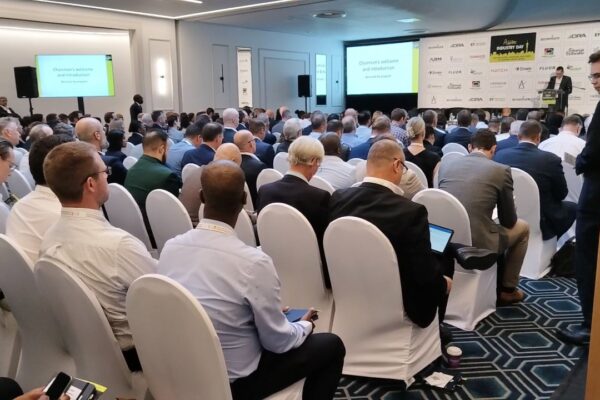
I do not want Critical Conversations to become another speaking platform populated by people who already know one another congratulating themselves for identifying problems that everybody else can also see.
Conversation on its own is beginning to feel insufficient to me.
That does not mean every discussion must end with Bernard Swanepoel marching off to solve the problem personally, because the whole point of this uncomfortable realisation is that I cannot. What I can do is use whatever influence remains to identify the people who hold the missing pieces. I need to know whether this collection of experience, credibility, institutional memory and relationships can still be made useful. Perhaps that is the only kind of power we ever truly had.
Looking back at my career, the periods during which I made the greatest difference were rarely the periods in which I felt most powerful. It was in the difficult moments that required someone to make a difficult decision where I felt untouchable! The power was never the title itself. It was what the title allowed us to attempt while we had it.
I am not ashamed of the life I have built, nor am I interested in portraying a sense of guilt about being fortunate. I have worked hard, taken risks, failed, recovered, built businesses, created jobs, and had an extraordinary amount of luck along the way. I am proud of much of what I have done and profoundly grateful for the life it has given my family.
The discomfort comes from knowing that all those things can still coexist with the reality outside that apartment.
One person’s success does not cure another person’s suffering, and perhaps one of the crueller lessons of becoming older is realising that achievement does not eventually graduate you into some class of human being capable of fixing everything that disturbs you.
Sometimes you remain exactly what you were fifty years ago: one person confronted by something much bigger than yourself. The difference is that I am no longer that young man with very little besides ambition.
I know people now. So do many of you.
Somewhere in this country is another 21-year-old with Zack’s intelligence, determination and ridiculous confidence, but without Zack’s opportunities. I cannot promise him the same life my son has had, and neither can you.
But surely, after everything our generation has learned and everything we have been fortunate enough to accumulate, we can do more than explain why the problems were too big for us. I would like Critical Conversations to be where we try.
And if you have walked any meaningful part of this road with me over the last few decades, I am asking you to walk this last stretch with me too.
Will you?
~ Z. B. S









































Latest Posts